
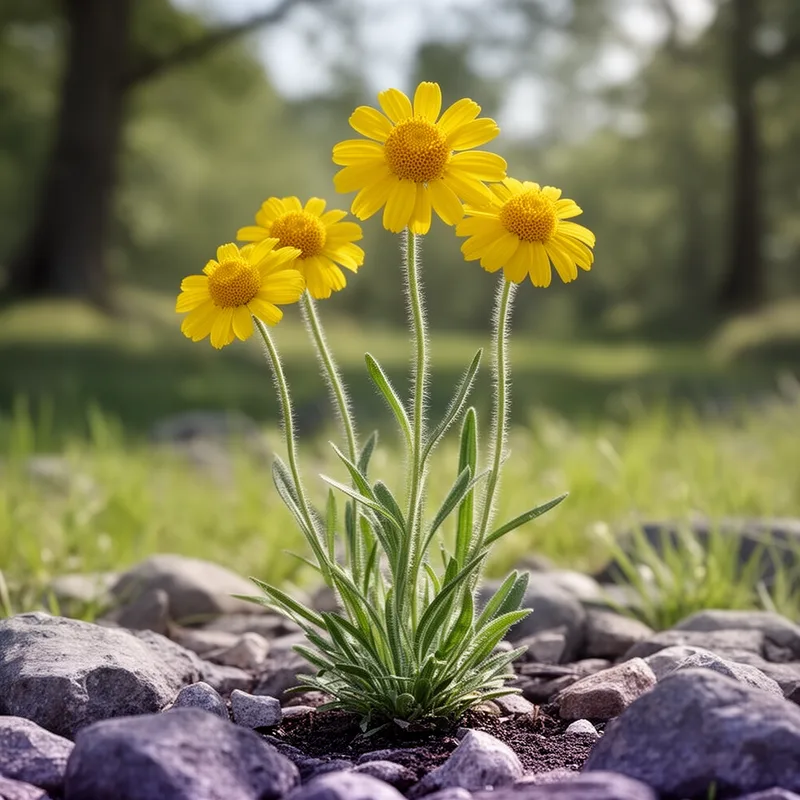
Buphthalmum salicifolium
- noun
- Specialized
- Buphthalmum salicifolium is often found on rocky slopes, showcasing its delicate, willowy stems.
Examples
-
The open woodland was dotted with patches of Buphthalmum salicifolium thriving in the sunlight.
-
Gardeners appreciate Buphthalmum salicifolium for its vibrant yellow flowers and delicate stems.
-
Buphthalmum salicifolium can often be seen blooming along the rocky hillsides in late spring.
-
The Buphthalmum salicifolium blooms beautifully in the spring.
-
Many gardeners appreciate the Buphthalmum salicifolium for its striking flowers.
-
Buphthalmum salicifolium blooms in sunny spots, adding bright yellow color to open woodlands.
-
The garden was filled with vibrant clusters of Buphthalmum salicifolium, which attracted many butterflies.
Synonyms

A hairy wild plant from Europe and Asia with deep yellow daisy-like flowers in open woods and rocky slopes
A small European plant with yellow daisy-like flowers
Surface Forms
Morphology
Buphthalmum + salicifolium
This is a scientific Latin binomial (genus + species) rather than a regular English phrase; knowing the provided gloss 'Buphthalmum' (a flowering plant) and an absent dictionary entry for 'salicifolium' does not allow a B1 learner to derive the specific meaning. Any etymological hints (e.g. Latin -folium = leaf, salici- = willow) are specialized linguistic knowledge beyond B1 and make the name effectively non-compositional for typical learners.
Etymology
Buphthalmum salicifolium comes from old Greek and Latin words that picture the plant: buphthalmum means 'ox-eye' for its round, deep yellow daisy-like flower, and salicifolium means 'willow-leaved' for its thin, long leaves. That's why the name helps you remember a hairy plant that lives for many years with bright yellow flowers on long, thin stems.

