
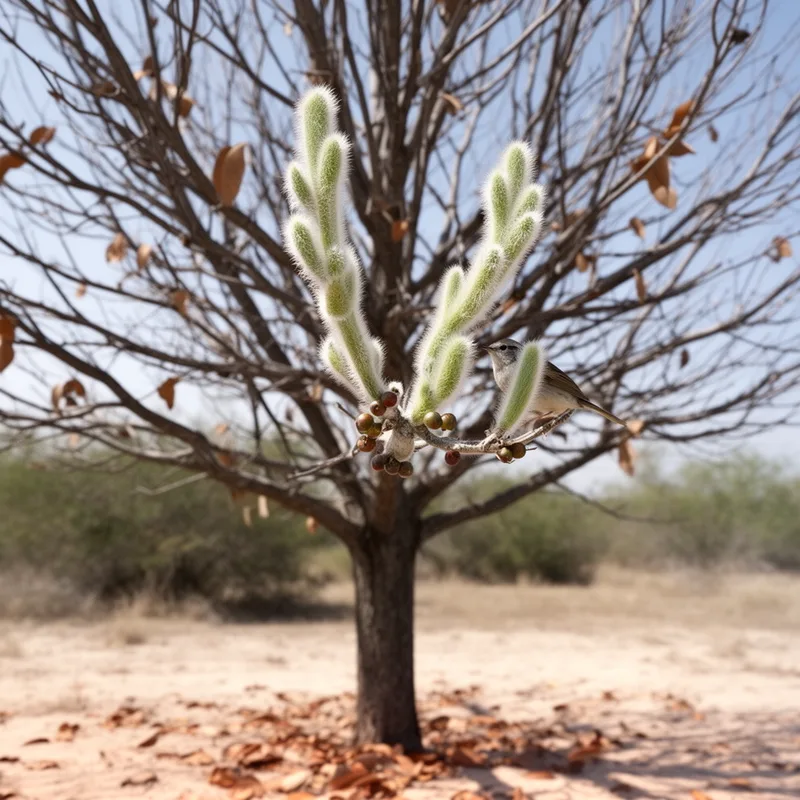
Bumelia lanuginosa
- noun
- Specialized
- In the southeastern United States, Bumelia lanuginosa is recognized for its distinctive woolly shoots.
Examples
-
The Bumelia lanuginosa thrives in sandy soils across parts of Texas and Florida.
-
Botanists studied the leaf structure of Bumelia lanuginosa to understand its adaptation to dry climates.
-
Birds often feed on the fruits of Bumelia lanuginosa during late summer.
-
The Bumelia lanuginosa is often found in the forests of Florida.
-
Many gardeners appreciate the Bumelia lanuginosa for its unique texture.
-
The Bumelia lanuginosa produces small, sweet fruits that attract various bird species.
-
You can identify Bumelia lanuginosa by its dense foliage and unique growth pattern in local parks.
Synonyms
A tree from southeastern US and Mexico that loses its leaves and provides strong wood
Surface Forms
Morphology
Bumelia + lanuginosa
This binomial is compositional: Bumelia names the genus (a shrub/tree) and the species epithet lanuginosa is a descriptive Latin adjective meaning 'woolly' or 'downy', so a learner who knows both constituents can infer it denotes a woolly Bumelia. Note that 'lanuginosa' is not an English dictionary word and requires recognition of Latin descriptive morphology, but the sense is directly derivable rather than idiomatic.
Etymology
Bumelia lanuginosa comes from two parts: Bumelia (the group name) and lanuginosa, a Latin word meaning 'woolly'. One popular reason for this name is the tree's dense, woolly young shoots, so the name helps you remember the plant by its hairy new growth.

