
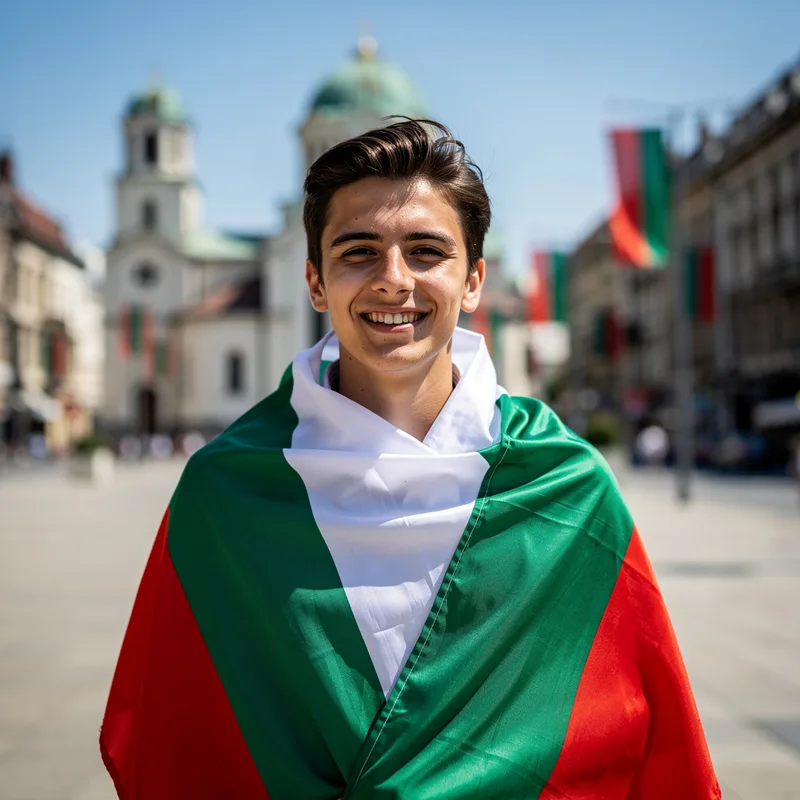
Bulgarian
 4
2.3
4
2.3

- noun
- /bʌlˈɡɛr.i.ən/
- GEORGE: Here come the Bulgarians!
Loading YouTube…
Watch on YouTubeThe next day, the Germans, Bulgarians and Turks mopped up the West Bank of the Argus.
- The next day, the Germans, Bulgarians and Turks mopped up the West Bank of the Argus.
Examples
-
At the beginning of the transition, most Bulgarians entertained high hopes for improving environmental quality.
Academic text (1995) -
The Bulgarians gathered in the town square to celebrate their national holiday.
-
Well, Bulgarians are upset about losing control.
-
The Bulgarians send their thanks.
-
First, Bulgarians have taken positive steps on the road to a clean environment.
Academic text (1995) -
It's the Bulgarians who speak Russian, not the other way around.
Fiction book (1991) -
And the Americans hate that the Bulgarians are slowing down the transition so much.
-
Sofia, the national capital and home to one in eight Bulgarians, particularly suffered from industrial pollution.
Academic text (1995) -
Early medieval Europe also saw the arrival of the Avars and Bulgarians in the 6th century.
Blog text (16) -
Bulgarians abandoned Greek-controlled areas of Macedonia; Greeks fled from regions of Macedonia ceded to Bulgaria and Serbia.
Academic text (2008)
Compounds


- Literature
A very old Slavic language used in the 9th–11th centuries for early Bible translations

- Literature
A first Slavic written language used to translate the Bible and church texts in the Middle Ages
Surface Forms
Morphology
Etymology
Bulgarian for a person comes from the name Bulgaria, which comes from the Bulgars who settled the area long ago. So, a Bulgarian is 'someone from Bulgaria'.