

Buddhistic


 1
8.1
1
8.1
- adjective
- /ˌbʌdɪˈstɪk/
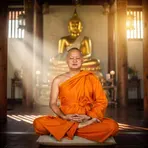
- The documentary explored the Buddhistic traditions that have influenced Asian cultures for centuries.
Examples
-
Many people find peace and clarity through Buddhistic practices like meditation.
-
I mean, I don't mean to be Buddhistic or anything.
-
She is never idle, raising domesticity to an art form, a Buddhistic perfection in every ironed crease.
Fiction book (1998) -
Buddhistic philosophy, in contrast, is the in-en (Sanskrit: hetu pratyaya) law.
Academic text (1990) -
Although we have to leave the modification of the technical issues untouched in this paper, Kosawa himself proposed a new "Ajase complex" to be considered along with the Oedipus complex, "challenging" the Freudian notion of guilt with a Buddhistic experience of Zangeshin.
Academic text (1990) -
She follows a Buddhistic approach to life, emphasizing compassion and mindfulness.
Synonyms
 91
3.6
91
3.6
About the religion and ideas of the Buddha or his followers
How Buddhist
1
8.1
 143
4.7
143
4.7
Surface Forms
Morphology
Etymology
Buddhistic comes from Buddha, a title that means 'the awakened one', plus the ending -istic which means 'relating to', like in the common word Buddhist. So Buddhistic means 'relating to Buddhism'.