

Buchloe dactyloides
- noun
- /ˈbʌkloʊ dækˈtɪloʊɪdz/
- Specialized
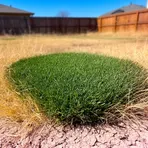
- Buchloe dactyloides is often used in drought-resistant lawns throughout the central United States.
Examples
-
The prairie was covered with Buchloe dactyloides, providing food for grazing animals.
-
Farmers in Kansas often plant Buchloe dactyloides for its drought resistance.
-
Because Buchloe dactyloides needs little water, it's ideal for xeriscaping projects.
-
The lawn was covered in Buchloe dactyloides.
-
Buchloe dactyloides is commonly used for sustainable landscaping due to its low water requirements.
-
Many homeowners choose Buchloe dactyloides for their lawns because it thrives in dry conditions.
-
During the summer months, Buchloe dactyloides remains green while other grasses turn brown.
Synonyms


 1
4.4
1
4.4
A low, tough grass used for lawns that needs little water
Surface Forms
Morphology
Buchloe + dactyloides
This is a scientific Latin binomial (genus + species) whose referent is directly compositional: if a learner knows 'Buchloe' as buffalo grass and recognizes the binomial pattern, they can identify the phrase as that species of grass. Although the species epithet 'dactyloides' is morphologically Latinate and its internal sense may be obscure, it does not make the whole expression idiomatic—its meaning as a particular buffalo-grass species is recoverable from the constituents.
Etymology
Buchloe dactyloides may come from old words meaning Buchloe 'ox or cow' and dactyloides 'finger-like'. People likely used this name because the grass grew where large grazing animals like the 'buffalo' fed and its thin blades looked like little fingers, so the name links to the modern common name 'buffalo grass'.