
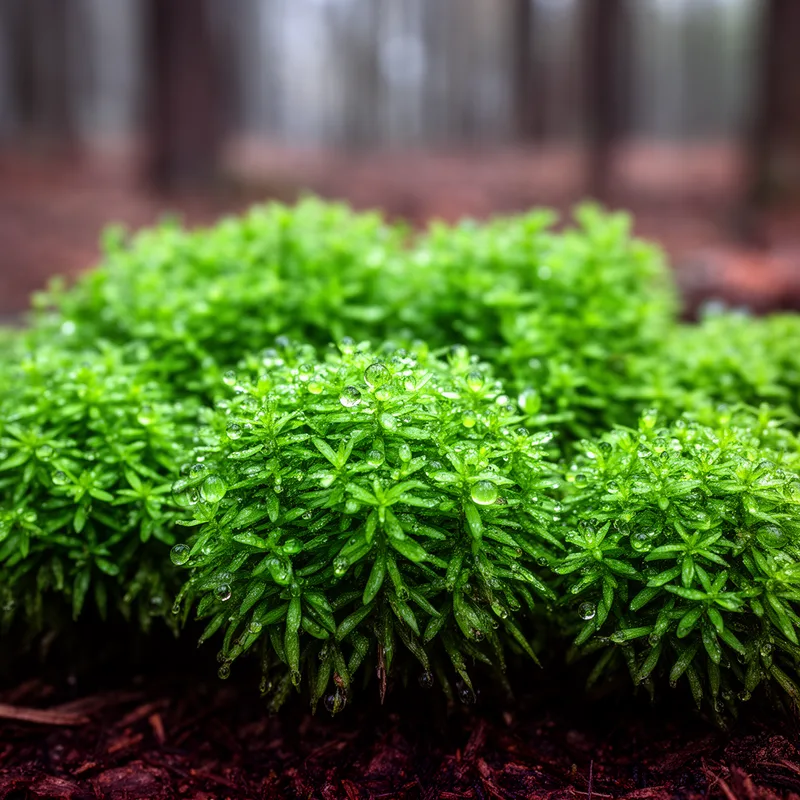
Bryopsida
- noun
- /braɪˈɒpsɪdə/
- Specialized
- The Bryopsida class includes many species of moss.
Examples
-
Members of Bryopsida are important in many ecosystems due to their moisture-retaining properties.
-
The forest floor was thickly carpeted with Bryopsida species.
-
Scientists study Bryopsida to better understand the evolution of land plants.
-
Are Bryopsidas important for ecosystem health?
-
The forest floor was thickly carpeted with Bryopsida species, providing habitat for various small creatures.
-
Members of Bryopsida are important in many ecosystems due to their moisture-retaining properties, which help prevent soil erosion.
-
Scientists study Bryopsida to better understand the evolution of land plants and their role in ecological balance.
Synonyms
A group of moss plants that have leaf-like green parts

A group of small green plants without flowers that grow in damp places
Compounds
Surface Forms
Morphology
Bryopsida = bry + opsida
The term uses a specialized scientific stem and a taxonomic class suffix, so its meaning is not transparent for most learners.
Etymology
The word Bryopsida comes from the Greek root bryo-, which means 'moss', and the ending -psida, used in plant names to mean a 'group' or 'type'. So Bryopsida is simply the name for the group of 'true mosses', plants with small leafy bodies rather than flat ones.

