

Broussonetia papyrifera
- noun
- Specialized
- The bark of Broussonetia papyrifera has been used for centuries to make traditional tapa cloth.
Examples
-
Gardeners appreciate Broussonetia papyrifera as an ornamental shade tree in many parts of the world.
-
The leaves and fruits of Broussonetia papyrifera attract a variety of birds and insects.
-
Look at that beautiful Broussonetia papyrifera!
-
The Broussonetia papyrifera grows tall.
-
Gardeners appreciate Broussonetia papyrifera as an ornamental shade tree in many parts of the world.
-
The bark of Broussonetia papyrifera has been used for centuries to make traditional tapa cloth.
-
In tropical regions, Broussonetia papyrifera provides excellent shade and adds beauty to gardens.
Synonyms
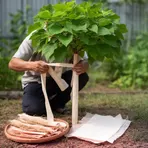
A small Asian tree with bark people use to make cloth
Surface Forms
Morphology
Broussonetia + papyrifera
This is a scientific Latin binomial rather than a compositional English phrase: its parts are proper names/Latin morphemes (and 'papyrifera' is not glossed), so a B1 learner who only ‘knows’ the listed constituents would not be able to derive the meaning. The name functions as a technical label for a species (paper mulberry) and lacks the transparent, productive English composition patterns learners rely on, making it unpredictable without prior exposure or botanical knowledge.
Etymology
Broussonetia papyrifera gets its name from a naturalist called Broussonet and from old words that mean 'paper-bearing'; the second part, papyrifera, points to this. The tree's bark was beaten into sheets to make tapa cloth and paper-like material, so the name links to its use and to the common name 'paper mulberry'.

