
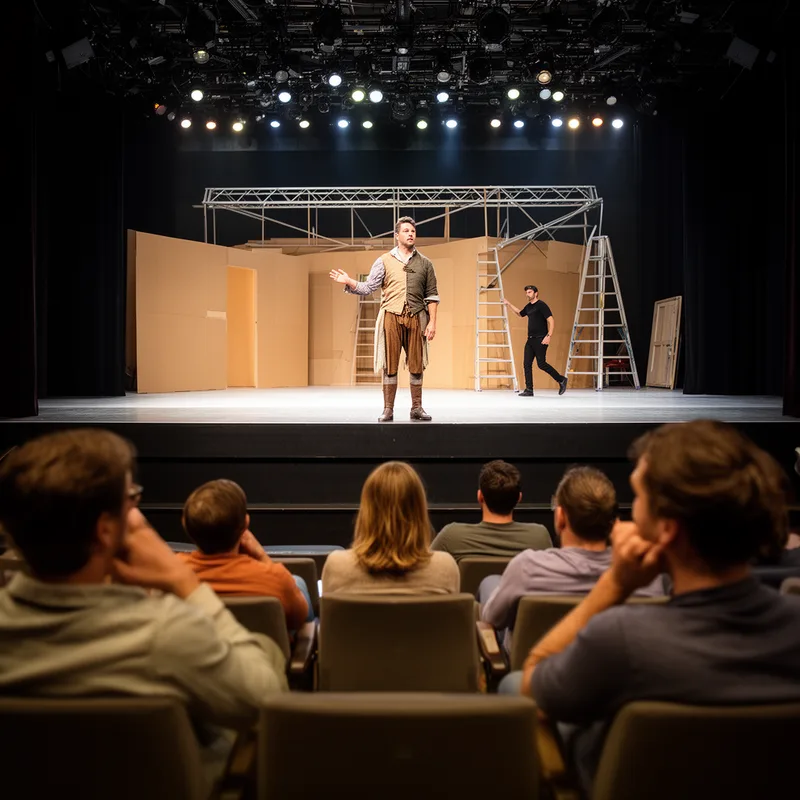
Brechtian
 1
9.9

- adjective
- /ˈbrɛk.ti.ən/
- Literature
- Using Brechtian methods, the director aimed to provoke critical thought instead of simply entertaining the audience.
Examples
-
Bennett analyzes contemporary trauma art that, in a Brechtian fashion, seeks to negotiate a balance between encouraging audience identification and thwarting it through the deployment of strategies of estrangement.
Academic text (2008) -
Nevertheless, one of the key features of Brechtian discourse is that it strategically engages with the discourses of the past.
Academic text (2002) -
Precisely where official expectation for discipline and spectacle was highest, there was a Brechtian everyday form of resistance.
Academic text (1990) -
The press release says that "the show this year will be a Brechtian, Felliniesque circus, highly physical, very colorful, and pretty silly, with lots of music and song."
Blog text (2) -
This was also a key Brechtian topos, deployed especially in his attack on what he called the "Aristotelian" theater, defined primarily as "empathetic" theater.
Academic text (2002) -
The most Brechtian moment in the U of M's Threepenny happens before the show starts and takes the form of an extended teaching skit showing the audience what happens to inconsiderate ticketholders who forget to silence their phones.
Blog text (23) -
Al-Ani basically employs the Turath elements in a Brechtian mode, whereby a simple nonsensical tale is demystified and transformed into a parable.
Academic text (1997) -
The play incorporated Brechtian techniques to keep the audience emotionally detached from the characters.
-
Her performance was distinctly Brechtian, reminding viewers to question societal norms rather than just absorb the story.
How Alienating

Surface Forms
Morphology
Etymology
Brechtian comes from the name of the German playwright Bertolt Brecht and means 'in the style of Brecht'. It describes theatre techniques that keep the audience at a distance so they think about the ideas on stage instead of only feeling emotions.