
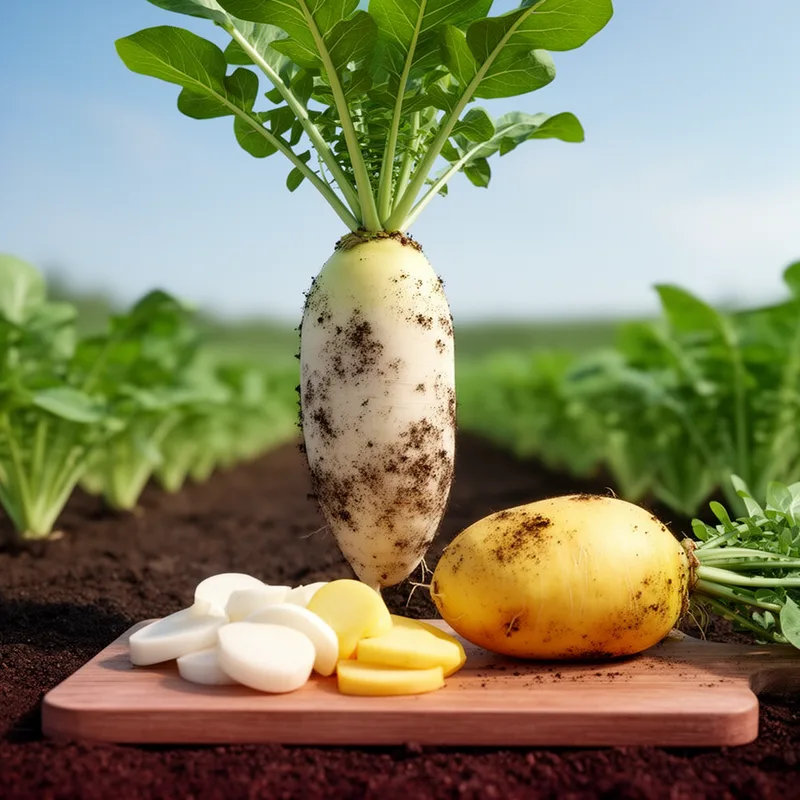
Brassica rapa
- noun
- /ˈbræsɪkə ˈræpə/
- Specialized
- Some subspecies of Brassica rapa are popular in Asian cuisine.
Examples
-
The yellow root of Brassica rapa is commonly used in soups and stews.
-
The farmer grows Brassica rapa in her garden.
-
Farmers often grow Brassica rapa for its nutritious and versatile roots.
-
Have you ever tasted Brassica rapa in a salad?
-
The root of Brassica rapa is commonly used in various dishes around the world.
-
Farmers often grow Brassica rapa for its nutritious root and leafy greens.
-
In the garden, Brassica rapa can thrive in cool weather and is harvested in the fall.
Synonyms
 38
1.0
38
1.0

A round root vegetable with white or yellow flesh eaten as food
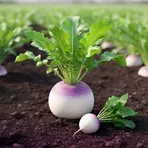
A plant that farmers grow for a round edible root and leaves you can eat

A round white root vegetable that people eat cooked or raw
Surface Forms
Morphology
Brassica + rapa
This is a Latin binomial (taxonomic) name rather than a compositional English phrase; the species epithet 'rapa' is not an English word and offers no clear lexical clue. Even if a learner knows 'Brassica' refers to cabbage-like plants, they would not reliably infer the specific edible root (turnip) meaning from the label alone, so the expression is not transparently derivable.
Etymology
Brassica rapa comes from old Latin words: Brassica meant 'cabbage' and rapa meant 'turnip'. So the name gives a simple picture of a cabbage-like plant with a big edible root, which is why we use it today for plants such as the turnip.