
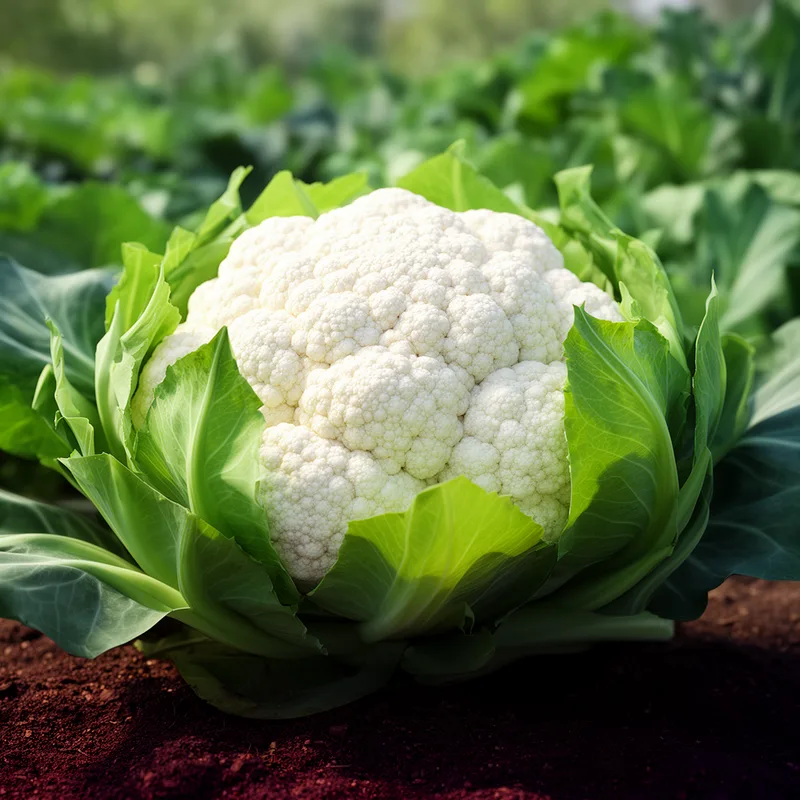
Brassica oleracea botrytis
- noun
- Specialized
- Many varieties of Brassica oleracea botrytis are grown for their tender, white florets.
Examples
-
I bought a fresh Brassica oleracea botrytis from the farmer's market.
-
The leaves of Brassica oleracea botrytis help protect the head from sunlight and pests.
-
Botanists classify cauliflower as Brassica oleracea botrytis within the cabbage family.
-
Have you ever tried cooking Brassica oleracea botrytis with cheese?
-
Chefs often use Brassica oleracea botrytis to create delicious vegetable dishes.
-
I added Brassica oleracea botrytis to my salad for extra crunch and flavor.
-
At the grocery store, I found Brassica oleracea botrytis on sale this week.
Synonyms

 30
1.4
30
1.4

A white vegetable with a round head of small flower buds you eat
Surface Forms
Morphology
Brassica + oleracea + botrytis
This is a Latin taxonomic name: while 'Brassica' signals the cabbage/broccoli plant family, the specific epithets 'oleracea' and 'botrytis' are not semantically transparent or known to a B1 learner, so the common meaning 'cauliflower' cannot be derived from the parts. Scientific binomials are technical labels rather than compositional everyday phrases, making the expression unpredictable for learners.
Etymology
Brassica oleracea botrytis comes from older words: Brassica and oleracea tie it to the 'cabbage' family, and botrytis means a 'bunch' like grapes. Because a cauliflower's white head is a tight bunch of small flower buds, this long name became the scientific name for the vegetable we call cauliflower.