
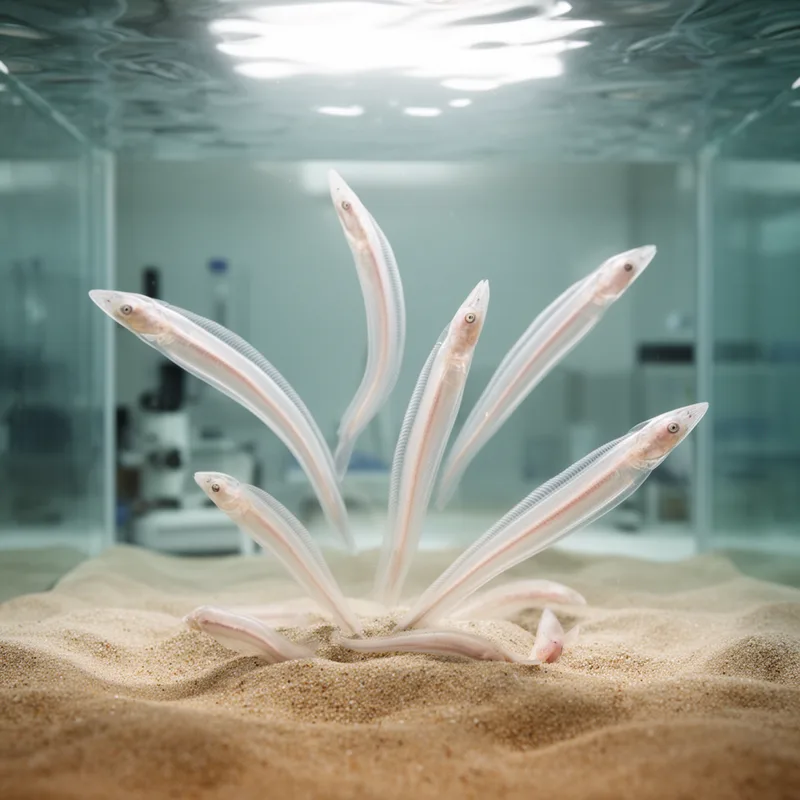
Branchiostomidae
- noun
- /ˌbræŋkiəˈstɒməˌdeɪ/
- Specialized
- The Branchiostomidae family includes several species of lancelets.
Examples
-
Researchers collected specimens from several species within the Branchiostomidae for genetic analysis.
-
The anatomy of Branchiostomidae helps illuminate the transition from invertebrates to vertebrates.
-
Members of the Branchiostomidae family are considered important for studies on vertebrate evolution.
-
Did you know that Branchiostomidae are considered primitive chordates?
-
The Branchiostomidae family is known for its unique features that resemble those of fish.
-
Scientists study Branchiostomidae to better understand the evolutionary history of vertebrates.
-
Various species under the Branchiostomidae family inhabit sandy ocean floors.
Synonyms

A family of small, fish-like sea animals called lancelets
Surface Forms
Morphology
Branchiostomidae = Branchiostoma (opaque) = Branchiostoma + idae
Formed by a genus name plus the zoological family suffix '-idae'; this taxonomic formation is specialist and not transparently meaningful to general learners.
Etymology
The word Branchiostomidae comes from the parts branchio- 'gill', -stoma 'mouth' and -idae 'family'. So Branchiostomidae means a 'gill-mouth family', a simple name for the small, fish-like animals called lancelets that have gill slits and a mouth.

