
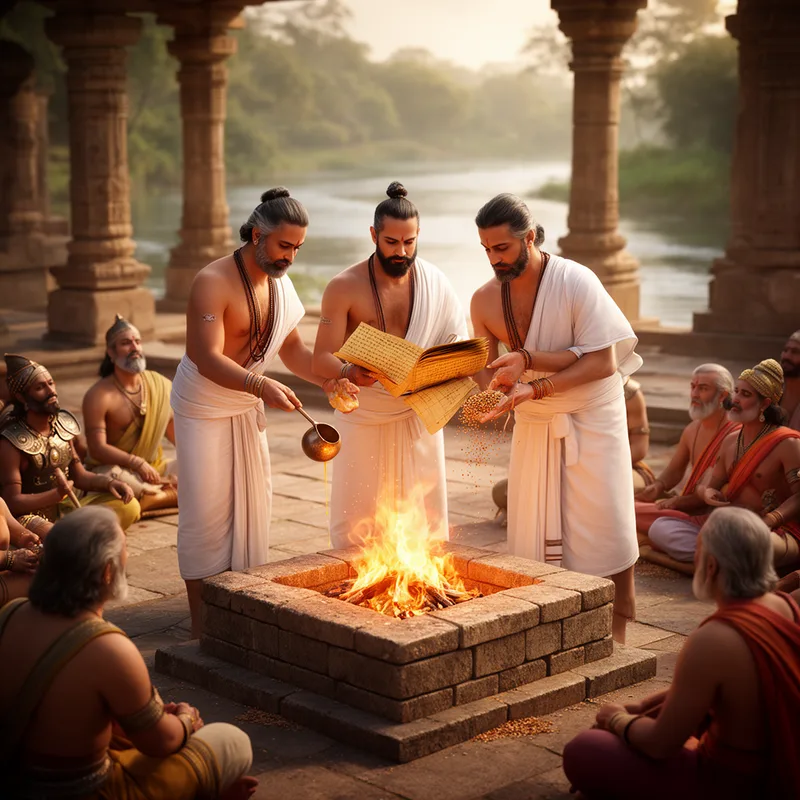
Brahmanism


 1
9.9
- noun
- /ˈbrɑːmənɪzəm/
- Specialized
- Historically, Brahmanism laid the foundation for a complex social structure in ancient India.
Examples
-
Many rituals in Brahmanism are still observed in modern Hindu practices.
-
The ancient texts of India discuss Brahmanism as the religious and social system that influences Hinduism.
-
The closest parallel to Yahweh in ancient Brahmanism was Ishvara, a personification and penultimate expression of the absolute Brahman.
Academic text (1999)
Synonyms
 1
9.9
A religious and social system in Hinduism that gives Brahmin priests authority

An ancient Indian religion that worships many gods and follows rituals in the Vedas
Surface Forms
Morphology
Brahmanism = Brahman (semi-transparent) = Brahman + ism
Formally 'Brahman' + '-ism' indicates a system or doctrine, but the specific historical social meaning tied to the Brahmin priesthood and Vedic practices requires cultural knowledge and may confuse learners who know only the metaphysical sense of 'Brahman'.
Etymology
Brahmanism comes from the ancient Indian word Brahman, which meant 'ultimate spirit', and from Brahmin, the name for the priest class who kept the Vedas. So Brahmanism originally named the old religious system led by those priests and is the ancestor of modern Hinduism.