
Bos indicus
- noun
- /bɑs ˈɪndɪkəs/
- Specialized
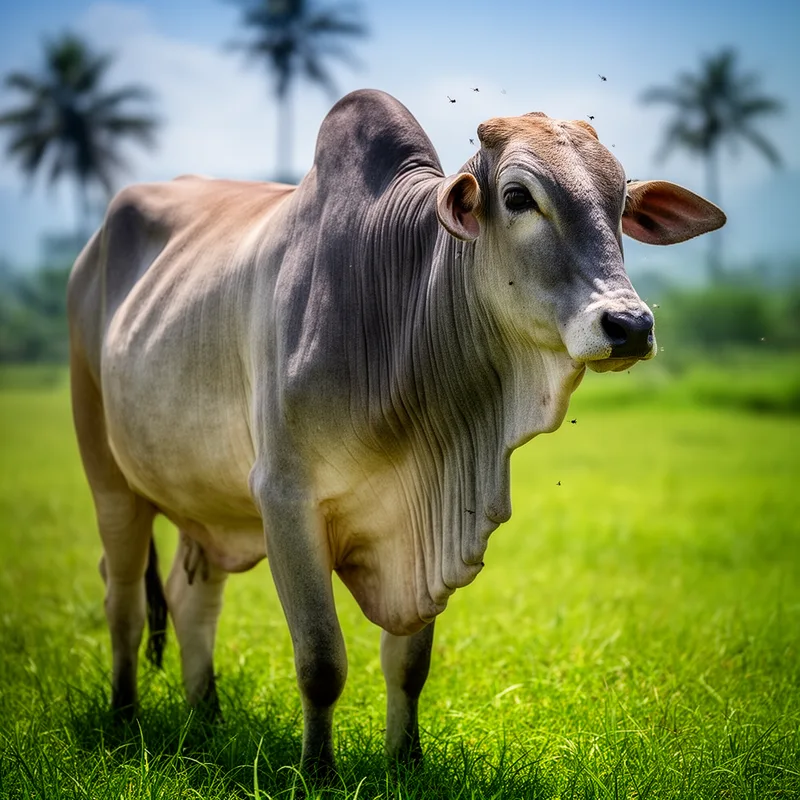
- The characteristic hump on the shoulders distinguishes Bos indicus from other cattle species.
Examples
-
The Bos indicus is well adapted to hot climates.
-
The Bos indicus breeds are well adapted to hot, humid climates due to their heat resistance.
-
Many ranchers in the southern United States crossbreed Bos indicus cattle with local breeds to improve hardiness.
-
Farmers in Brazil often raise Bos indicus cattle.
-
The distinctive hump on Bos indicus makes them easily recognizable among cattle breeds.
-
Farmers often choose Bos indicus for crossbreeding to enhance their livestock's heat resistance.
-
In tropical climates, Bos indicus are favored for their ability to withstand harsh conditions.
Surface Forms
Morphology
Bos + indicus
This is a Latin scientific binomial rather than a normal English phrase: although 'Bos' signals cattle, 'indicus' is a Latin epithet (not a common English word) and the species-level meaning and traits require taxonomic/Latin knowledge beyond B1. The overall sense ('a particular species of cattle from South Asia') is not derivable from everyday English composition, so it is unpredictable for a typical B1 learner.
Etymology
Bos indicus comes from Latin words: Bos means 'ox' or 'cattle' and indicus means 'from India', so the name literally means 'Indian cattle'. That's why Bos indicus today refers to the humped, heat resistant cattle of South Asia and the breeds used in crossbreeding.

