
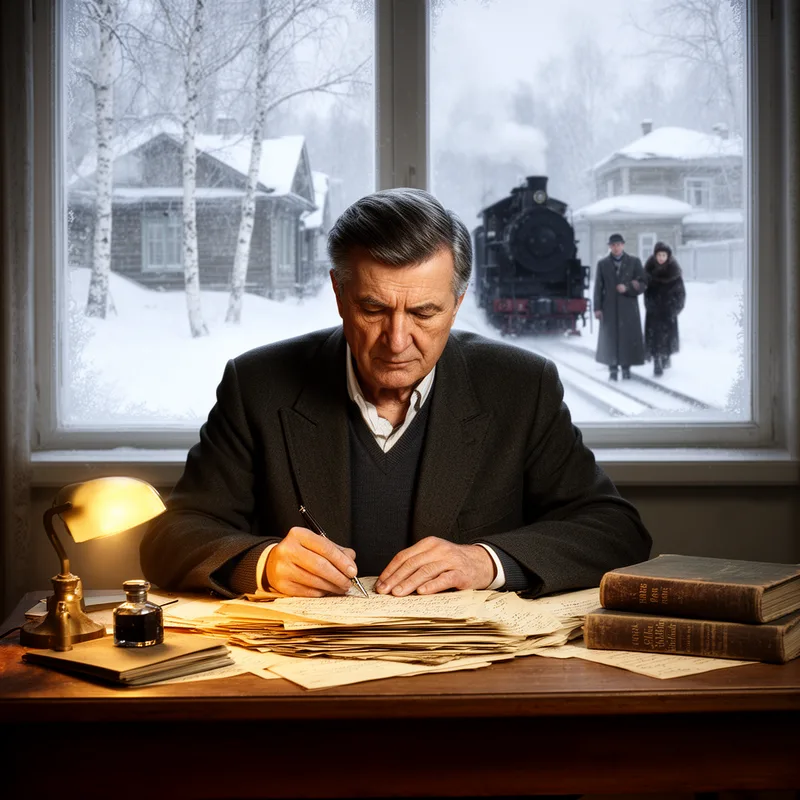
Boris Pasternak
 1
6.8

- proper noun
- /ˈbɔrɪs ˈpæstərnæk/
- In 1958, Boris Pasternak became the first Russian author to win the Nobel Prize in Literature.
Examples
-
Boris Pasternak's Doctor Zhivago remains a classic work of twentieth-century literature.
-
Did you read Boris Pasternak's novel, Doctor Zhivago?
-
Boris Pasternak won the Nobel Prize in Literature in 1958, which he was later forced to decline.
-
Many readers around the world have been moved by Boris Pasternak's poetry and novels.
-
The famous author Boris Pasternak wrote many poems.
-
Boris Pasternak's novel Doctor Zhivago vividly depicts life during the Russian Revolution.
-
Readers often discuss the themes of love and suffering in Boris Pasternak's works.
Synonyms
 2
8.8
Russian writer best known for the novel Doctor Zhivago
Surface Forms
Morphology
Boris + Pasternak
This is a proper name referring to a specific person; its identity and biographical details are not compositionally derived from the constituent words 'Boris' and 'Pasternak'. Knowing the names alone requires world/cultural knowledge to connect them to the Russian writer and poet, so a B1 learner who only knows the constituent words would not reliably infer the MWE's meaning.
Etymology
Boris Pasternak was a Russian writer best known for the novel Doctor Zhivago; the book was banned in his country but secretly published abroad, and when he won the Nobel Prize in 1958 he was forced to decline it, so his name today often stands for 'great literature' and 'artistic freedom'.