

Bolsheviki
- noun
- /ˌboʊlʃəˈviːki/
- Archaic
- In 1917, the Bolsheviki launched a successful revolution that transformed Russia.
Loading YouTube…
Watch on YouTubeThat's what Marx, and then later the Bolsheviks have in mind.
- That's what Marx, and then later the Bolsheviks have in mind.
- So there's a coup by Lenin's group known as the Bolsheviks against all the other socialists.
- I think he was a count when the Tsar was usurped and the Bolsheviks came in and they should have killed him.
- Yes, we've made China very rich, but they have at their very, very core remain committed Bolsheviks.
Examples
-
And of course, in October, the Bolsheviks, after one attempt that failed, the Bolsheviks seized power.
-
And one of the things that the Bolsheviks did was clamp down on intellectual life.
-
At that point, all the burden of fighting against the Bolsheviks will fall on Poland.
-
After the war, after everything calmed down and the Bolsheviks were out of there, Japan started a new government.
-
But what I heard was the Bolsheviki traded some Finnish professors for the release of John Reed.
-
So Russians were starving, freezing and dying even after the Bolsheviks had taken control.
-
And this was the preparation of what became the coup, the October coup, when the Bolsheviks seized power.
-
The first issue of the Liberator was largely devoted to events in Russia and included Reed's "Red Russia - The Triumph of the Bolsheviki."
Academic text (2002) -
So there's a coup by Lenin's group known as the Bolsheviks against all the other socialists.
-
The Bolsheviki aimed to establish a socialist state following the overthrow of the provisional government.
Synonyms
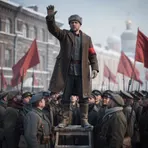
 3
9.0
3
9.0

A person who was part of the Russian revolutionary group that took power in 1917
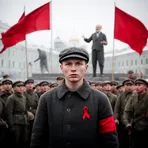
A person who belonged to the Russian party that followed Lenin and took power in 1917
Surface Forms
Morphology
Etymology
Bolsheviki comes from the Russian word bol'shevik, based on bol'sh meaning 'more' or 'big', so it originally meant 'the majority'. Think of English 'big' or 'bigger' to remember that Bolsheviki were the larger, majority faction of the Russian party that led the 1917 revolution.