
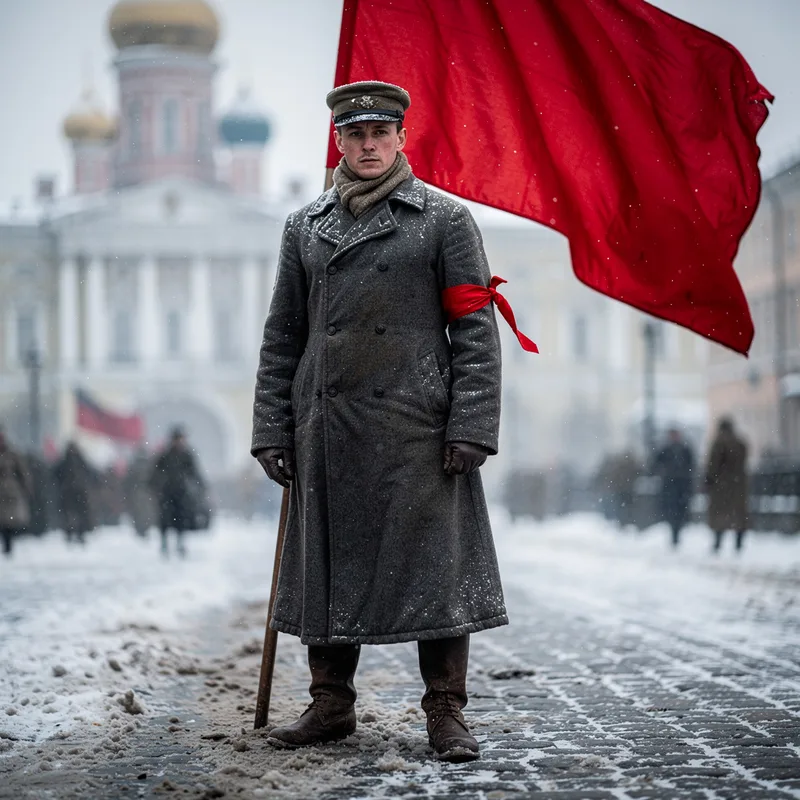
Bolshevik
 11
9.1
11
9.1

- adjective
- /ˈboʊlʃəvɪk/
- The Bolsheviks were sensitive to the respect with which Wilson had treated Bolshevik peace principles, writes B. Unyerberger.
- Bolshevik revolution
- Bolshevik seizure
- Bolshevik party
Loading YouTube…
Watch on YouTubeTwo dozen witnesses, most of them strongly anti Bolshevik, testified.
- Two dozen witnesses, most of them strongly anti Bolshevik, testified.
- Why do I have to do this struggle session, this kind of Bolshevik Soviet.
- And on the other side, Vladimir Lenin, the leader of the, the Bolshevik Party and de facto the Russian state also wants to fill.
- And as an example, Lenin seizing power and making the Bolshevik Revolution a reality was regarded as utopian and insane.
Examples
-
Historians often debate the implications of Bolshevik ideologies on modern socialism.
-
After that moment, hostility to the League of Nations was one of the main trends of Bolshevik politics and propaganda.
Academic text (1995) -
I view with alarm the influence over you of this Bolshevik lady.
-
But it was not, if you like organised sort of Bolshevik control or anything like that, far from it.
-
What Russia needed at the beginning of the twentieth century was not a Bolshevik Revolution but an American one.
Academic text (2000) -
In 1917, for example, Russian women joined both Bolshevik forces and the counterrevolutionary Black Hundreds.
Academic text (1997) -
The most influential political event on the Liberator's editorial policy was the Bolshevik Revolution of 1917.
Academic text (2002) -
Roughly put, many Russians cannot dissociate the avant-garde from its collaboration with the violent Bolshevik state.
Academic text (1997) -
The principles of the Bolshevik movement radically changed Russian society in the early 20th century.
-
During the Bolshevik Revolution, many people supported the overthrow of the existing government.
Synonyms

Relating to the Russian political movement that followed Lenin and supported state control
Supporting quick, large changes to a country's government and economy, often by a small group taking power
Surface Forms
Etymology
Bolshevik as an adjective comes from the Russian bol'shinstvo 'majority' (from bol'she 'more' or 'bigger'), and it describes things or ideas that belong to or come from that majority group, which is why it means 'relating to the Bolsheviks' or their politics.