
Boeotian


 1
9.9
1
9.9
- adjective
- /biˈoʊʃən/
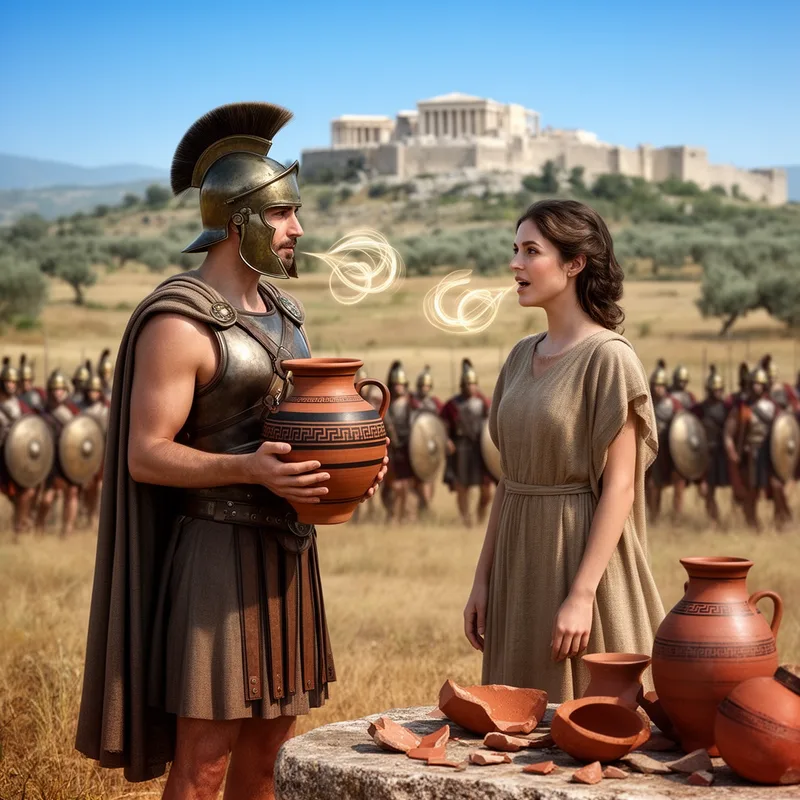
- Many artifacts from Boeotia, including pottery and sculptures, reflect the unique Boeotian style of ancient art.
Examples
-
I'm a devotional/traditional Hellenic Polytheist, but unlike most traditional Hellenists, I'm following Boeotian traditions rather than Attic traditions.
Blog text (26) -
There are some differences between Attic (or Athenian, the major city of the region of Attika) and Boeotian polytheism traditions, including some deity names.
Blog text (26) -
This is one of, if not the main reason I specifically follow Boeotian traditions.
Blog text (26) -
He was a wall of a man, like Ajax, with an open-faced Boeotian helmet and white grease under his eyes for vision in the dark.
Fiction book (1999) -
He was the author of Boeotian Black Figure Vase Painting of the Archaic Period (1990) and The Flight of Icarus through Western Art (2002) and served as a guest curator for several exhibitions.
Blog text (25) -
The Boeotian dialect was spoken by the inhabitants of ancient Boeotia during classical times.
-
In classical literature, Boeotian customs were often contrasted with the more refined practices of nearby Athens.
Surface Forms
Morphology
Etymology
Boeotian comes from Boeotia, a region of ancient Greece, so it originally meant 'from Boeotia' and is used for people, language, or things connected to that area, like Boeotian pottery or the Boeotian dialect.