
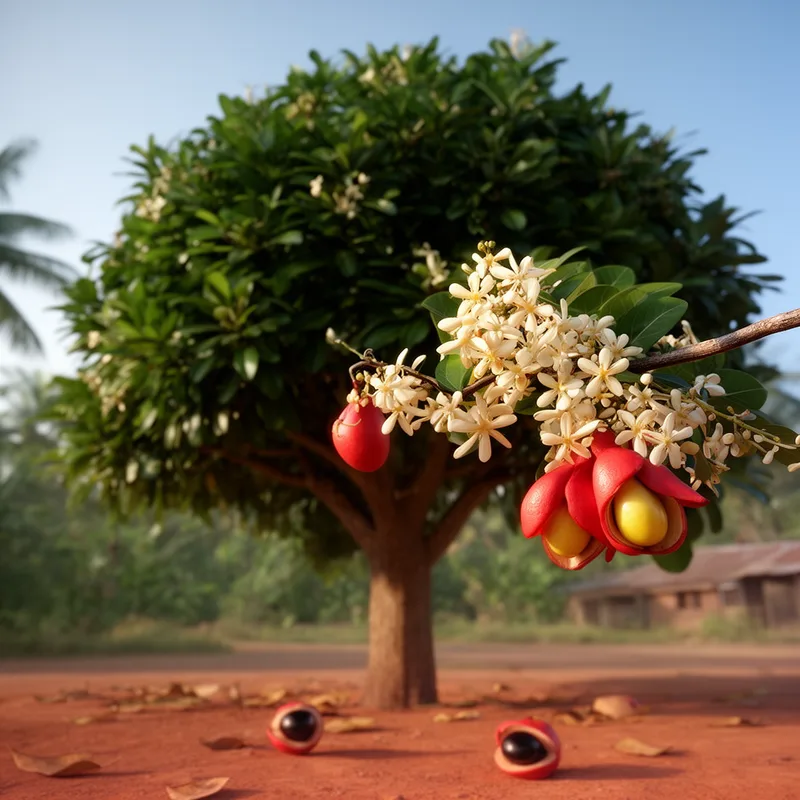
Blighia sapida


 1
9.9
- noun
- /ˈblaɪɡiə səˈpɪdə/
- Specialized
- The Blighia sapida tree is prized both for its shade and its culinary value in Caribbean cuisine.
Examples
-
Botanists studied the spread of Blighia sapida from West Africa to Jamaica.
-
The Blighia sapida tree produces beautiful flowers.
-
Harvesting the fruit of Blighia sapida requires knowledge of when it is safe to eat.
-
Have you ever tasted the fruit of the Blighia sapida?
-
The Blighia sapida tree produces bright red fruit that is a staple in Jamaican cuisine.
-
In West Africa, the Blighia sapida is known for its fragrant flowers and delicious ackee fruit.
-
Farmers in the Caribbean cultivate Blighia sapida for its colorful fruit, which is often used in traditional dishes.
Synonyms
 1
9.9
An evergreen tree in tropical regions that has flowers and red fruits people cook and eat
 1
9.9
A tropical tree with red fruit that can make you sick unless fully ripe
Surface Forms
Morphology
Blighia + sapida
This is a Latin scientific binomial (genus + species) functioning as a proper name for a specific tree; the parts are not common English lexical items and do not transparently combine to mean 'tropical evergreen tree with edible fruit'. Even if 'sapida' is etymologically related to 'sapid' (tasty), that knowledge is specialized and not available to an average B1 learner, so the overall meaning is not derivable from the constituents.
Etymology
Blighia sapida is named after Captain William Bligh; one popular story says sailors like him helped bring the tree's fruit from West Africa to the Caribbean, so the name reminds us of its travel and history. The second word sapida comes from a word meaning 'tasty', which fits the bright, edible fruit called 'ackee'.