
Blastodiaceae
- noun
- /blæstəˈdiːeɪsiː/
- Specialized
- Researchers discovered a new species within the Blastodiaceae during their survey of freshwater ecosystems.
Examples
-
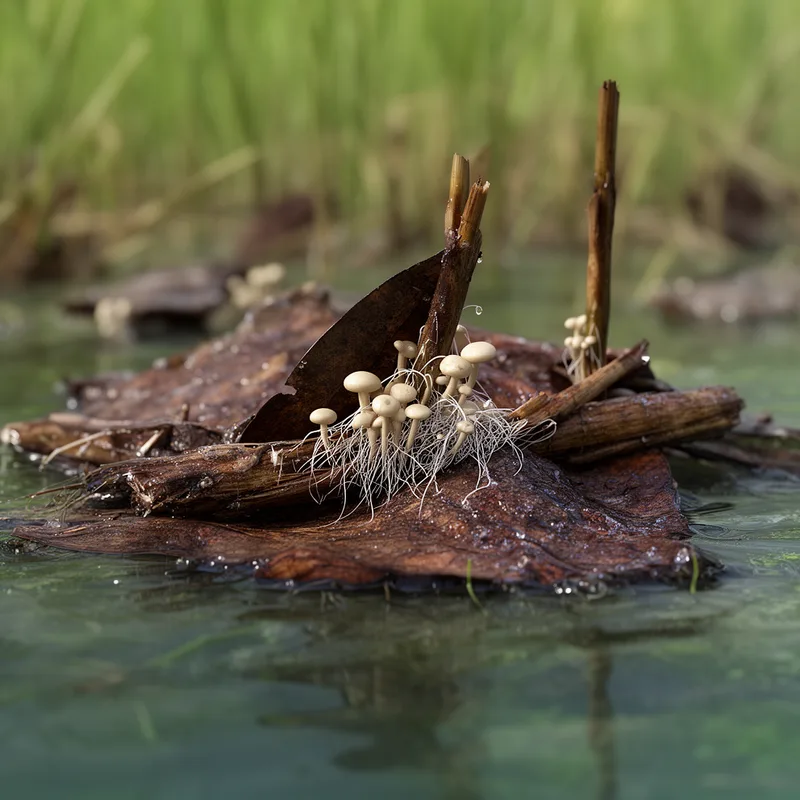
The Blastodiaceae family includes several genera of fungi found in aquatic habitats.
-
Members of the Blastodiaceae play a role in decomposing plant material in moist environments.
-
The Blastodiaceae family includes various saprobic fungi.
-
Researchers study Blastodiaceae to understand their ecological roles.
-
Members of the Blastodiaceae play a crucial role in breaking down dead plant matter in wetlands.
-
The Blastodiaceae family is essential for nutrient recycling in freshwater ecosystems.
-
Scientists identified multiple species of saprobic fungi belonging to the Blastodiaceae during their research.
Surface Forms
Morphology
Blastodiaceae = Blastodi + aceae
Formed from a genus stem plus the specialised taxonomic suffix '-aceae' (indicating a biological family); this scientific formation is not likely to be interpretable by an average B1 learner from knowledge of the parts.
Etymology
Blastodiaceae combines the Greek root blastos meaning 'bud' or 'sprout' with the family ending -aceae, as in Rosaceae for roses. So, Blastodiaceae is the name for a family or group of fungi, using the 'blastos' root as the base of the family name.

