
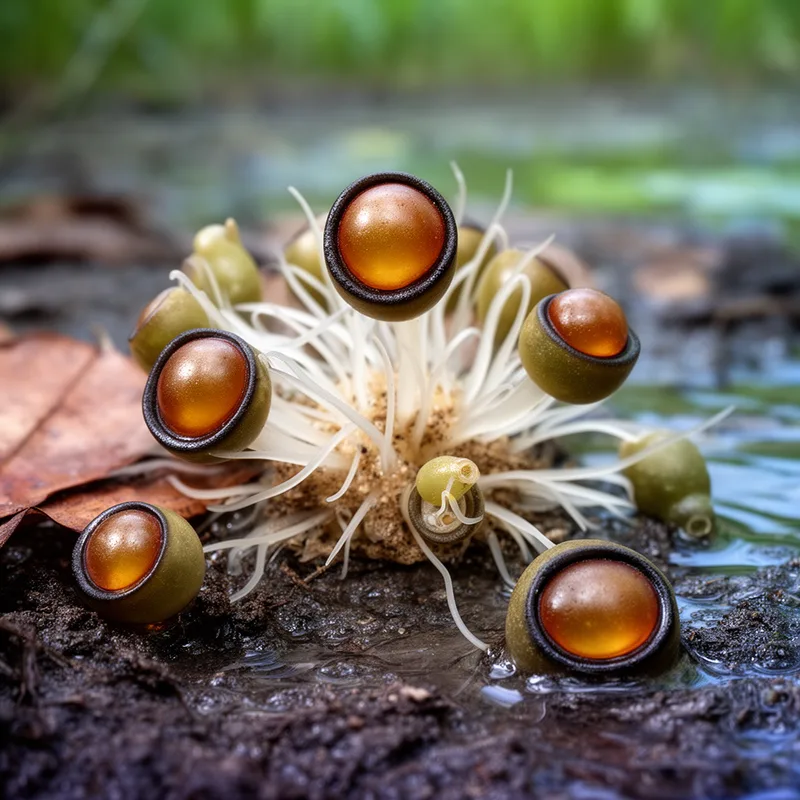
Blastocladiales
- noun
- /ˌblæstəˈklædiˌeɪlz/
- Specialized
- Members of the Blastocladiales exhibit a unique method of asexual reproduction involving resting spores.
Examples
-
The Blastocladiales are sometimes grouped with the Oomycetes due to similarities in their life cycles.
-
Researchers discovered several new species within the Blastocladiales in tropical wetlands.
-
The Blastocladiales order includes various species of fungi.
-
Many researchers study Blastocladiales for their unique reproductive methods.
-
The Blastocladiales are characterized by their ability to reproduce asexually through thick-walled resting spores.
-
Ecologists investigated the role of Blastocladiales in freshwater ecosystems during the research project.
-
Studies of the Blastocladiales have revealed fascinating insights into their germination and spore production.
Surface Forms
Etymology
Blastocladiales breaks into parts: blasto- meaning 'bud' and clad- meaning 'branch', with -ales used to name an 'order' of organisms. So, think of 'branching buds'—a simple picture that helps, because this order of fungi makes bud-like spore structures and grows in branching forms.

