
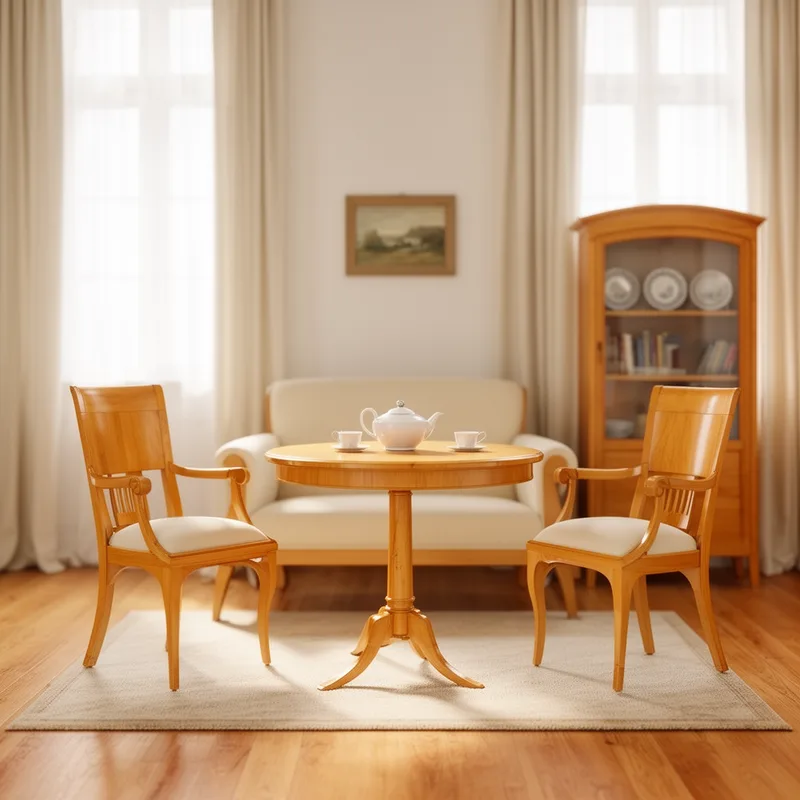
Biedermeier
 1
9.9
1
9.9

- adjective
- /ˈbiːdərˌmaɪər/
- Specialized
- Many collectors appreciate how Biedermeier pieces combine beauty with practicality.
- Biedermeier chairs
- Biedermeier table
Examples
-
The Biedermeier style is known for its clean lines and functional elegance in furniture design.
-
Two brothers walked off with a Biedermeier chest.
-
- Edie, I just think it will clash terribly with the Biedermeier chairs.
-
In his lifetime, Schubert was, in fact, one of the most popular and best-remunerated composers active in Biedermeier Vienna.
Academic text (1995) -
At the time, most interior design and furnishings were in a style that we today call Biedermeier: modestly ornamented forms derived from the Neoclassicism of the late eighteenth and early nineteenth century.
Academic text (2014) -
The spirit of the eighteenth century lives on in the more modest trends of nineteenth-century culture; the deceased Rococo gentleman finds the simple, poor Biedermeier family more worthy of his legacy than the rich Neo-Rococo relatives.
Academic text (2014) -
I admire how the Biedermeier table fits perfectly into the modern living space with its timeless charm.
Compounds
- Specialized
A simple, elegant style of furniture and paintings from early 1800s Germany and Austria
Surface Forms
Etymology
The word Biedermeier comes from a made-up German name made of bieder ('plain' or 'honest') and the common family name Meier. It was a joke name for a typical middle-class person, so Biedermeier style means simple, comfortable, and quietly elegant furniture and rooms.