
Bidens trichosperma
- noun
- Specialized
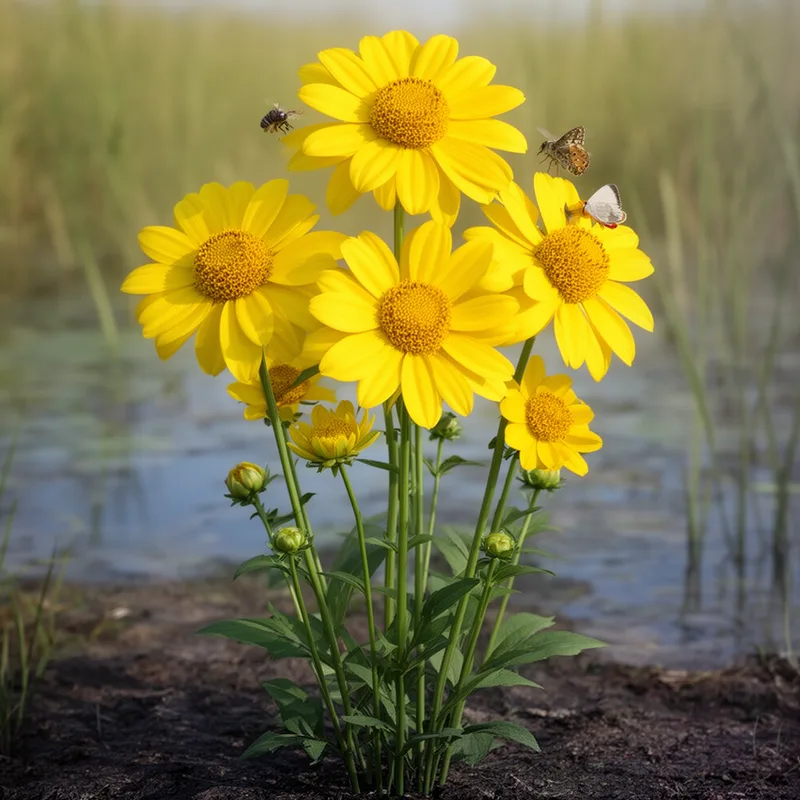
- The large yellow flowers of Bidens trichosperma attract a variety of pollinators.
Examples
-
Bidens trichosperma can be found in wetlands across the northeastern United States.
-
Gardeners sometimes plant Bidens trichosperma to enhance biodiversity in native gardens.
-
The Bidens trichosperma blooms in late summer.
-
Many gardeners appreciate Bidens trichosperma for its vibrant flowers.
-
Bidens trichosperma is known for its striking large yellow flowers, which can brighten up any wetland area.
-
In native gardens, Bidens trichosperma is often chosen for its ability to attract beneficial insects with its beautiful blooms.
-
Hikers in the northeastern United States often admire the vibrant yellow flowers of Bidens trichosperma along wetland trails.
Synonyms

A plant with yellow flowers and prickly seeds that stick to fur or clothes

A plant with yellow flowers and prickly seeds that stick to fur or clothing
Surface Forms
Morphology
Bidens + trichosperma
This is a Latin binomial (a scientific species name) whose meaning is referential rather than built from ordinary English vocabulary. The second element 'trichosperma' is not an English word and any derivation (e.g. Greek roots meaning 'hairy seed') requires specialist classical/botanical knowledge, so an average B1 learner who merely knows the listed constituents would not be able to infer the species description.
Etymology
Bidens trichosperma gets its name from old Latin and Greek words that describe its seeds. Bidens means 'two-toothed' because the fruit has two small hooks, and trichosperma means 'hairy seed' because the seeds have tiny hairs that help them stick to animals or clothes, so the name fits this yellow wetland plant.

