
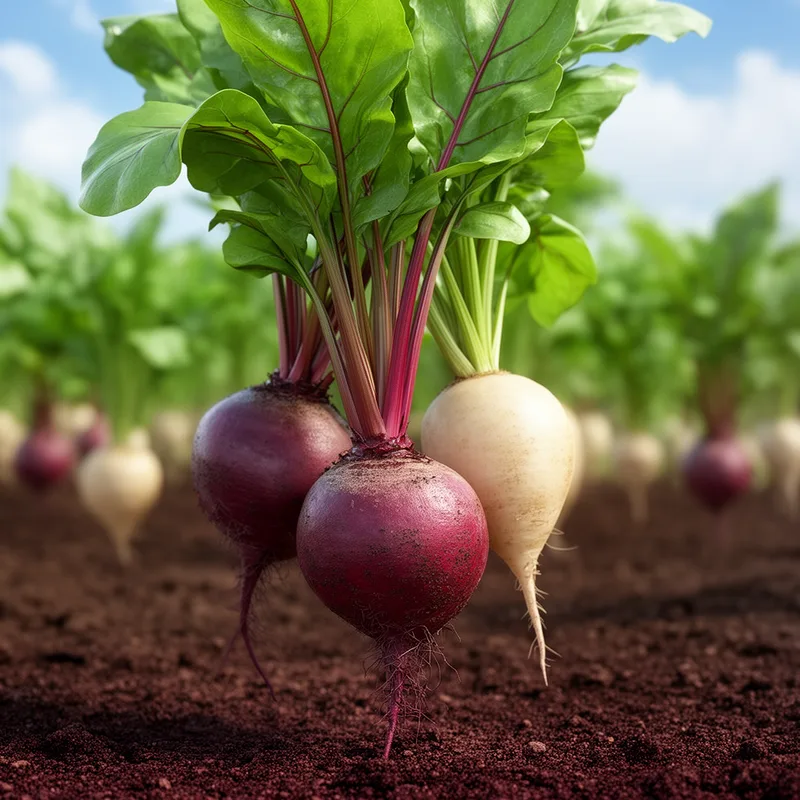
Beta vulgaris
- noun
- /ˈbeɪtə ˈvʌlɡərɪs/
- Specialized
- Beta vulgaris is cultivated worldwide for both its edible roots and leafy greens.
Examples
-
Farmers grow Beta vulgaris for its nutritious roots.
-
The sugar extracted from Beta vulgaris is a key ingredient in many food products.
-
Researchers are studying the genetic diversity of Beta vulgaris to improve crop yields.
-
The Beta vulgaris is commonly known as beetroot.
-
Farmers grow Beta vulgaris for its nutritious roots, which are popular in salads.
-
The sugar extracted from Beta vulgaris is used to sweeten many types of beverages.
-
Beta vulgaris, commonly known as beetroot, is often used to add color to dishes.
Synonyms

 80
1.0
80
1.0

A round red or purple root vegetable that you cook and eat

A plant with a large root that people grow and eat
Surface Forms
Morphology
Beta + vulgaris
Beta vulgaris is a Latin scientific name (genus + specific epithet); the genus 'Beta' is not a common English word and therefore not known to a B1 learner, while 'vulgaris' only gives a general sense of 'common' and does not indicate the plant or edible root. Because the taxonomic label encodes specialized botanical information rather than a predictable compositional meaning from the constituents, a learner who only knows the parts would not be able to infer 'beetroot / sugar beet'.
Etymology
Beta vulgaris comes from old Latin words: Beta was an old name for the beet plant and vulgaris means 'common', so the name literally says 'common beet'. This is why Beta vulgaris is the scientific name for the everyday beet plants we eat, like beetroot and sugar beet.