
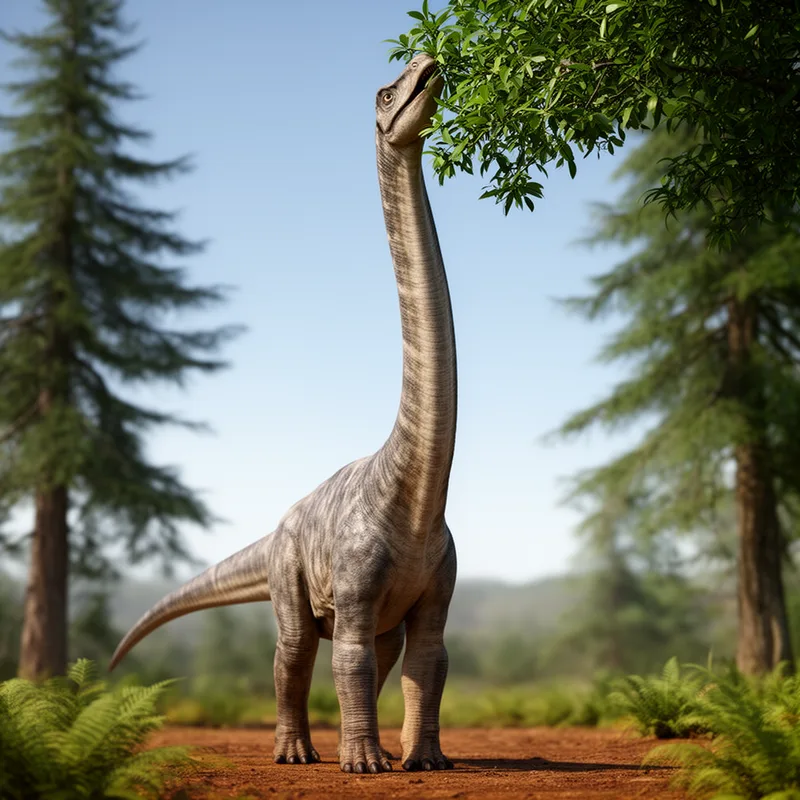
Barosaurus
- noun
- /ˌbɛrəˈsɔrəs/
- Specialized
- A female Barosaurus, one of the largest animals ever to have walked the earth, and her offspring are peacefully feeding on plants.
- Museum's Barosaurus
- adult Barosaurus
Examples
-
Barosaurus was a heavily built sauropod, although perhaps only eighty feet long.
Academic text (1991) -
Skeletons such as the Museum's towering Barosaurus give testimony to one of nature's grandest extravagances.
Academic text (1991) -
The story of how the Barosaurus came to the American Museum starts almost a hundred years ago.
Academic text (1991) -
Was Barosaurus capable of standing on its hind legs?
Academic text (1991) -
Barosaurus may have had six tons of fermenting plant material in its huge gut at any given time.
Academic text (1991) -
Barosaurus is one of the rarest of all North American dinosaurs.
Academic text (1991) -
A mother Barosaurus towers above the Rotunda's floor, protecting her young from a predator.
Academic text (1991) -
A female Barosaurus, one of the largest animals ever to have walked the earth, and her offspring are peacefully feeding on plants.
-
A mother Barosaurus towers above the Rotunda's floor, protecting her young from a predator.
-
Skeletons such as the Museum's towering Barosaurus give testimony to one of nature's grandest extravagances.
Synonyms
A very large plant-eating dinosaur with a very long neck that reaches leaves high in trees
Surface Forms
Morphology
Barosaurus = baro + saurus
The name is built from classical combining forms (baro- + -saurus) that are not standalone everyday English words, so learners cannot reliably derive the meaning from the parts.
Etymology
Barosaurus comes from Greek parts baros ('heavy') and saurus ('lizard'). So, 'Barosaurus' means 'heavy lizard', a good name for a huge, long-necked Jurassic dinosaur, and you can see saurus in familiar words like dinosaur.

