
Bantu
 2
8.2
2
8.2

- adjective
- /ˈbæn.tu/
- Both populations belong to the same Bantu group and speak the same Kiswahili dialect.
- Bantu education
- Bantu language
- Bantu Education Act
Loading YouTube…
Watch on YouTubeI like the, the the, the Bantu knots and the braids and the black hairstyles that that come from our culture.
- I like the, the the, the Bantu knots and the braids and the black hairstyles that that come from our culture.
Examples
-
Recently, scholars of Bantu languages have critiqued tree models for oversimplifying complex historical processes.
Academic text (2004) -
If it was a Bantu language, the question of timing would still not be settled.
Academic text (1991) -
A Bantu Word I learned form my mother.
-
Ntu is a Bantu word that means "essence of life."
Academic text (2009) -
And over time, Bantu languages have experienced extensive lexical borrowing and language drift.
Academic text (2004) -
The Umbundu language, like my mother's native Xhosa, is a Bantu tongue, intense and alliterative.
Fiction book (1997) -
Bantu farmer, left, oversees his field in the coastal scrublands of southern Tanzania.
Academic text (2009) -
The Zulu and Xhosa are among the most widely spoken Bantu languages in South Africa.
-
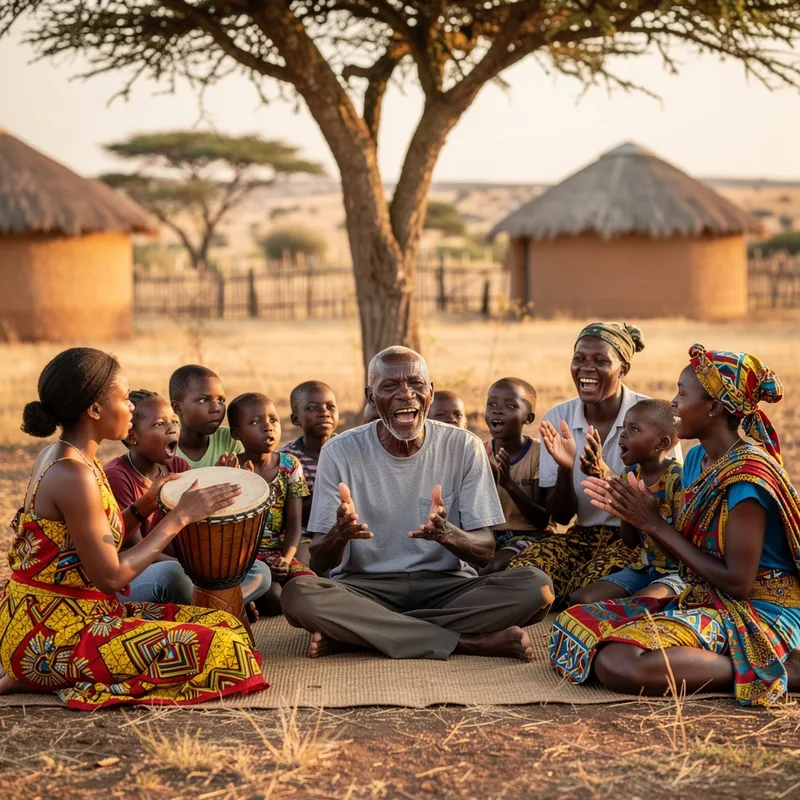
Many traditional ceremonies in Kenya celebrate Bantu culture and heritage.
-
A Bantu musical performance features vibrant rhythms and colorful costumes.
Synonyms
People, groups, or places where a Bantu language is spoken
Compounds
Surface Forms
Etymology
To call something Bantu means it relates to the Bantu-speaking peoples or their languages, and the name comes from ba- 'they' plus -ntu 'person' meaning 'people'. That's why Bantu as an adjective points to the people, their culture, or their languages.