
Baltic
- noun
- /ˈbɔltɪk/
- Specialized
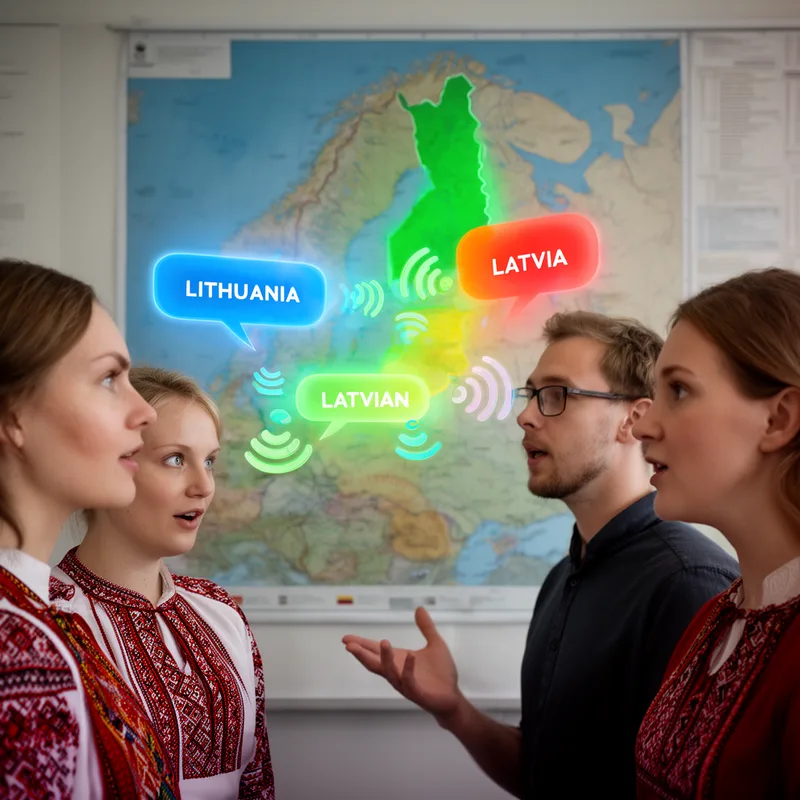
- Lithuanian and Latvian are both Baltic languages.
Examples
-
Linguists often study Latvian as a representative of the Baltic branch of the Indo-European language family.
-
Lithuanian is a living example of a Baltic language still spoken today.
-
Some linguists study Baltic to reconstruct aspects of Proto-Indo-European.
-
The similarities between Slavic and Baltic suggest a close historical relationship.
-
The Baltic languages are known for their unique grammar.
-
Lithuanian is a living example of a Baltic language still spoken today.
-
The similarities between Slavic and Baltic suggest a close historical relationship between the two language families.
Compounds

 12
4.0
12
4.0

A country in Northern Europe on the east coast of the Baltic Sea, such as Estonia, Latvia or Lithuania

 2
3.7
2
3.7
A country on the eastern coast of the Baltic Sea, like Estonia, Latvia, or Lithuania


- Specialized
A language like Lithuanian or Latvian that keeps many old grammar features

A dark, strong beer from countries near the Baltic Sea that is made in cool conditions and tastes rich

- Specialized
A group of languages spoken around the Baltic Sea, for example Finnish and Estonian
Surface Forms
Etymology
Baltic for the language group comes from the people called the Balts, so Baltic languages are the languages 'of the Balts', for example Lithuanian and Latvian.