
Balinese
 11
5.5

- adjective
- /ˌbɑːlɪˈniːz/
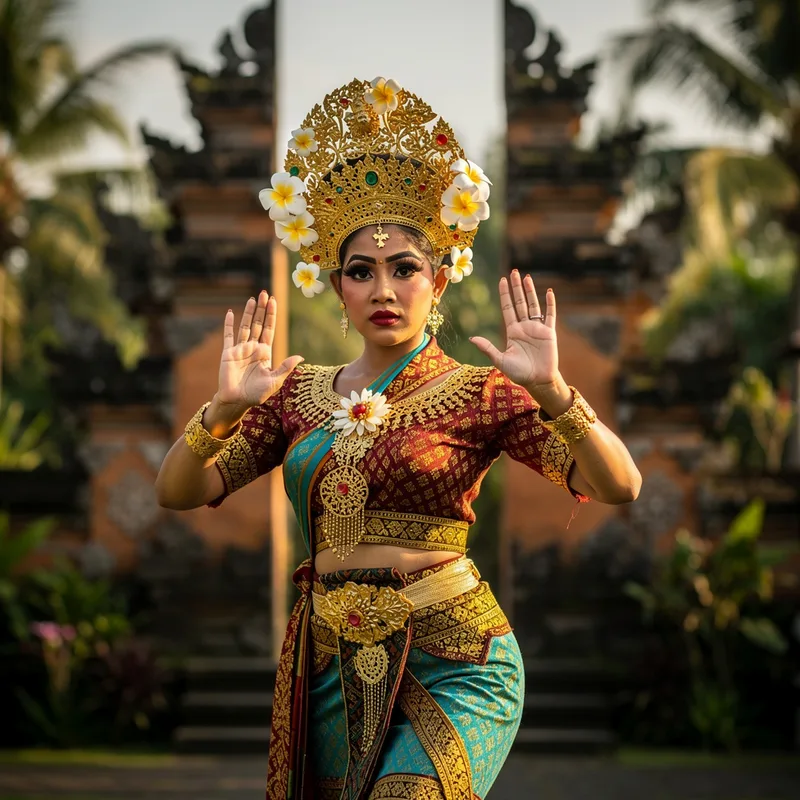
- Found on this site are colorful pictures and detailed descriptions of Balinese and Javanese gamelans, shadow puppet theatre, and Balinese dance.
- Balinese gamelan
- Balinese culture
- Balinese theatre
Examples
-
Angie Biehl, a percussion major, studied Balinese musical traditions.
Academic text (2006) -
A walk through the forest allowed close encounters with the common Balinese monkey.
Academic text (2001) -
Did you ever read about the Balinese way of dreaming?
-
And then when they got a little bit older, I started a Balinese furniture import business.
-
Nevertheless, the warmth of Balinese people prevails all year round.
Academic text (2001) -
Opposite the market is Ubud Palace, the venue for Balinese folk dances.
Academic text (2001) -
The premise is exquisitely landscaped with a picturesque Balinese garden by the restaurant.
Academic text (2001) -
Nearing my departure, I catch up with one of the most revered of Balinese festivals, the Galugang.
Academic text (2001) -
One of the teachers, Dorothy Morrison, brought her eighth graders to the university to demonstrate the Balinese gamelan.
Academic text (2006) -
During our visit to Bali, we learned about the beautiful Balinese culture and its rich traditions.
Compounds
Surface Forms
Morphology
Etymology
Balinese is formed from Bali and the ending -ese, an ending that means 'from' or 'belonging to' a place, as in Japanese. So Balinese means 'from Bali' and describes the people, language, or culture of the island.