
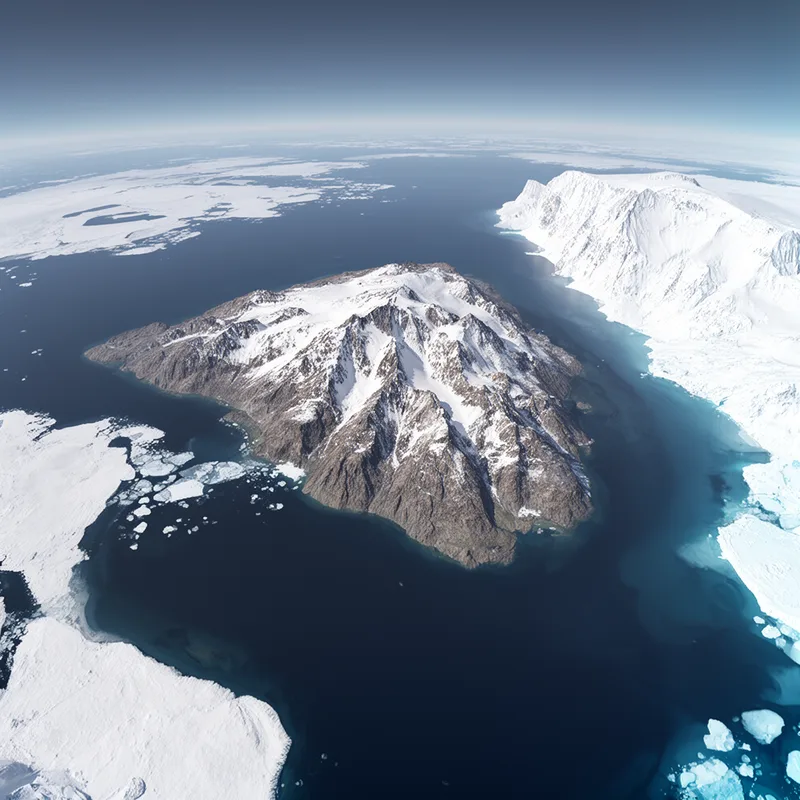
Baffin Island
 1
4.9

- proper noun
- /ˈbæfɪn ˈaɪlənd/
- Many Inuit communities live traditionally on Baffin Island, maintaining their cultural heritage.
Examples
-
The remote landscapes of Baffin Island attract researchers from around the world.
-
On the first expedition of American Charles Francis Hall, from 1860 to 1862, mapping of Frobisher Bay at Baffin Island was actually done by an Inuk, Koojesse, who sat alone in the front of the ship and charted the coast.
Academic text (1990) -
Hall's second expedition never went to Baffin Island; instead, he pursued the search for the Northwest Passage and the lost Franklin expedition.
Academic text (1990) -
That his wife was from Baffin Island, through an intermarriage between bands, attests to the lively exchange and travel habits of the Inuit (Rasmussen 1930a, 85).
Academic text (1990) -
Sutherland and her team spent several weeks studying the unique wildlife on Baffin Island.
Surface Forms
Morphology
Baffin + island
This is a compositional place name: the noun 'island' clearly denotes the referent type and 'Baffin' serves as the identifying name. A B1 learner who knows both constituents (or recognizes 'Baffin' as a proper name) can infer it refers to an island called Baffin, though specific geographic details (e.g., its size or exact location) are not derivable from the parts. The pattern 'Name + island' is cross-linguistically common, supporting straightforward transparency of the core meaning.
Etymology
Baffin Island is named after the English sailor William Baffin, who sailed near that Arctic island in the early 1600s. Because mapmakers used his name, the large island between Greenland and Hudson Bay is called 'Baffin Island' today.