
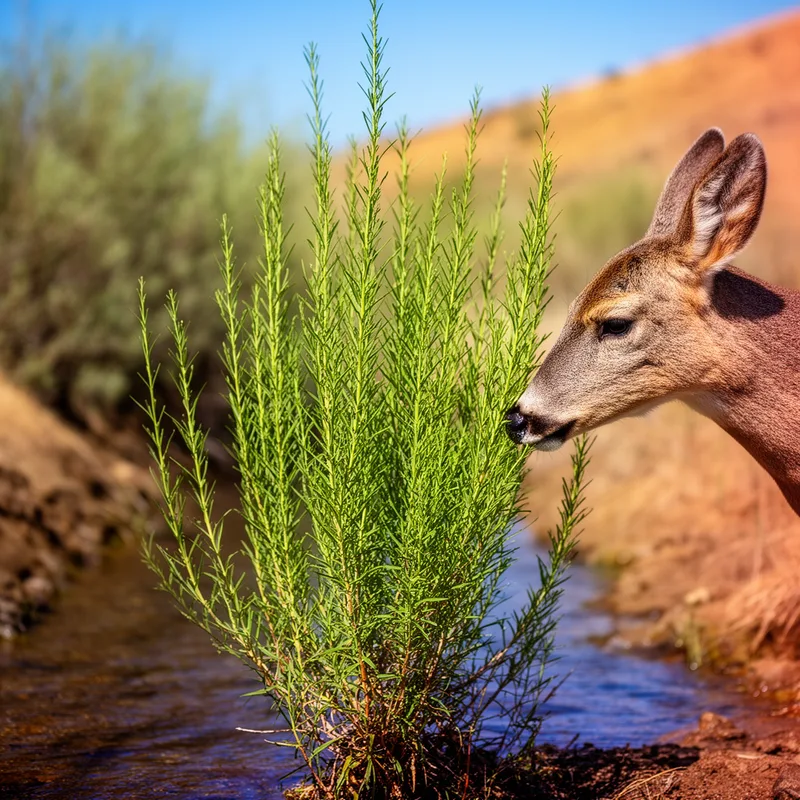
Baccharis viminea
- noun
- Specialized
- Wildlife experts observed that Baccharis viminea provides essential forage for local mule deer populations.
Examples
-
The slender shoots of Baccharis viminea make it easily identifiable among other native shrubs.
-
Baccharis viminea grows along streams and moist slopes throughout California's foothills.
-
The Baccharis viminea grows abundantly along the California coast.
-
Many Baccharis viminea plants thrive in dry, sandy soil.
-
Baccharis viminea is an important food source for mule deer in the California foothills.
-
In the spring, Baccharis viminea attracts various birds that feed on its leaves and seeds.
-
Baccharis viminea is commonly found in riparian areas, providing essential browse for wildlife.
Synonyms
A Californian shrub with thin leafy shoots that deer eat
Surface Forms
Morphology
Baccharis + viminea
This is a scientific Latin binomial (genus + species). A learner who knows 'Baccharis' can infer it is a type of shrub, but the species epithet 'viminea' is obscure/Latin (no common-English meaning provided), so the specific properties ('slender leafy shoots', importance as mule-deer browse) are not derivable from the constituents alone.
Etymology
The name Baccharis viminea may come from two old words: Baccharis from the wine god Bacchus and viminea from Latin for a thin, flexible 'twig'. That's why the shrub's long, slender shoots look like twigs, and the name helps you remember its thin, leafy stems.

