

Atlas
 75
7.9
75
7.9

- proper noun
- /ˈætləs/
- Literature
- In Greek mythology, the Titan Atlas was forced to bear the weight of the heavens.
Loading YouTube…
Watch on YouTubeJust stood at the bottom like Atlas.
- Just stood at the bottom like Atlas.
- It says that Atlantis was ruled by demigod kings beneath the the king Atlas.
Examples
-
"We gazed out at the topiary sculptures dotting the lawn: a bear, a dolphin, Atlas shouldering the world."
Fiction book (1998) -
The image of the world being held up by Atlas, which you are sculpting, is of prime importance.
Fiction book (2002) -
Once there, the hero found the Titan Atlas holding up the heavens.
-
So Atlas himself faints and scarce holds up his burden.
-
The ancient sculptor depicted Atlas supporting the sky on his shoulders in a magnificent statue.
-
Many stories describe Atlas as a giant who held the celestial spheres above him.
Compounds
 1
3.0
1
3.0
Mountain range in northern Africa between the Mediterranean Sea and the Sahara Desert


- Specialized
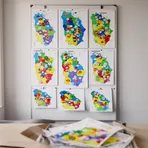
A collection of maps showing where different words and pronunciations are used

A tall evergreen tree from the Atlas Mountains with blue-green leaves often planted in parks and gardens


- Specialized
The top bone in the neck that supports the skull and lets the head nod

- Specialized
A very large moth from Asia with very wide wings sometimes raised for silk

- Specialized
A map or book of maps showing where local ways of speaking and words are used
Surface Forms
Etymology
Atlas is the name of a Titan in Greek myth who was punished by Zeus to 'carry' the sky on his shoulders. Because people imagined him holding the world, Atlas became a symbol of great strength and the name for a 'book of maps' that 'holds' the world on its pages.