
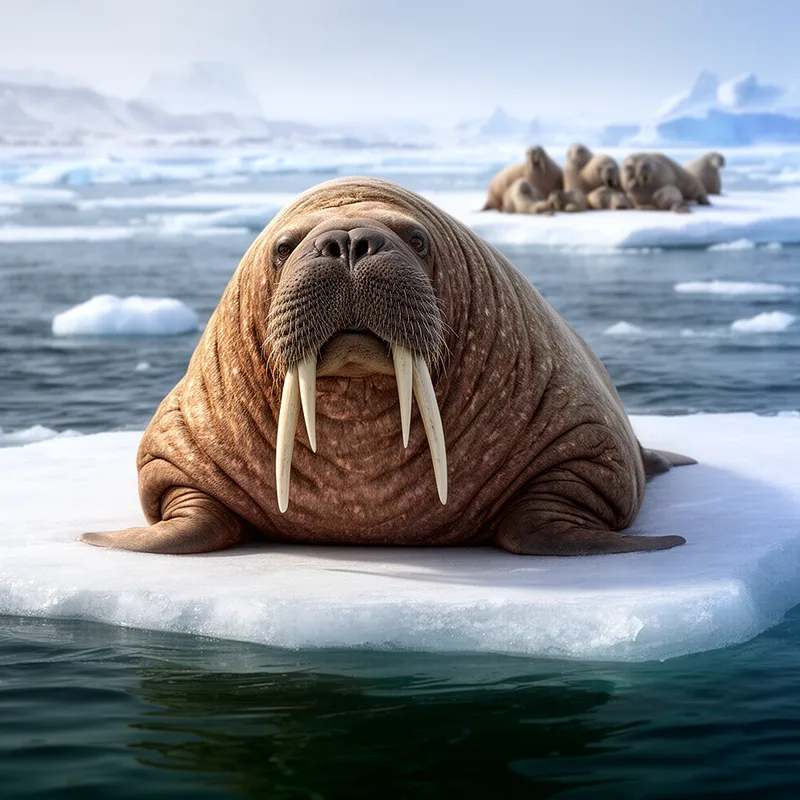
Atlantic walrus
- noun
- /əˈtlæntɪk ˈwɔːl.rəs/
- Canadian
- The Atlantic walrus is known for its impressive tusks and thick blubber, which helps it survive in cold waters.
Examples
-
The Atlantic walrus, known for its long tusks, is a fascinating animal that plays a crucial role in its ecosystem.
-
The Atlantic walrus is known for its long tusks.
-
Scientists are monitoring the population of the Atlantic walrus as climate change affects Arctic habitats.
-
Unlike its Pacific relative, the Atlantic walrus tends to form smaller herds.
-
Have you ever seen an Atlantic walrus in the wild?
-
Atlantic walruses are commonly found in the northern Atlantic walrus and Arctic waters, where they rely on sea ice for resting and breeding.
-
During the summer months, Atlantic walrus haul out on ice floes to bask in the sun and socialize with each other.
Synonyms

 23
2.1
23
2.1

A large sea mammal with long tusks, whiskers, and thick fat that lives in Arctic seas

A large sea mammal with long tusks and whiskers that lives in cold northern seas
Surface Forms
Morphology
The phrase combines the geographical adjective 'Atlantic' with the noun 'walrus', so its meaning — a walrus from the Atlantic region — is directly derivable from the constituents. This locative naming pattern is common in English (and in many other languages) for animal subspecies, making it immediately comprehensible to a B1 learner who knows both words.
Etymology
Atlantic walrus is a simple name made from a place and an animal: Atlantic (the ocean) and walrus (the large, tusked sea mammal). So the name means 'a walrus from the northern Atlantic and Arctic waters'.