
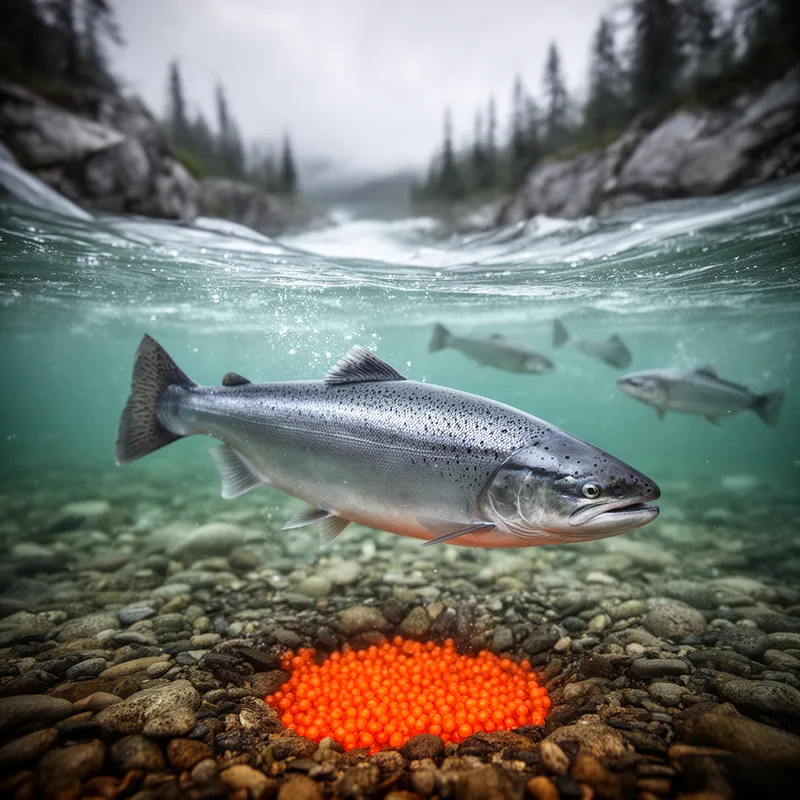
Atlantic salmon


 1
3.2
1
3.2
- noun
- /əˈtlæntɪk ˈsælmən/
- During the spawning season, Atlantic salmon migrate from the ocean up rivers to lay their eggs.
- Atlantic salmon (Salmo salar)
- Atlantic salmon stocks
- wild Atlantic salmon
Examples
-
However, aquaculture production of Atlantic salmon has increased dramatically, from almost none in 1960 to 1.2 million metric tons in 2005.
Academic text (2009) -
Specifically, Atlantic salmon production grew from zero in 1985 to more than 14,000 metric tons in 1995.
Academic text (1999) -
This is fresh Atlantic salmon from Atlantic City.
-
Most of the farmed production consists of Atlantic salmon, with the majority produced in Norway.
Academic text (1992) -
More than one million Atlantic salmon were reported to have escaped from farms in Washington and British Columbia between 1992 and 2002.
Academic text (2003) -
Hybridization results from breeding between farmed Atlantic salmon and wild Pacific salmon.
Academic text (1999) -
Still, many stocks of Atlantic salmon remain critically depressed in abundance (Fay et al. 2006).
Academic text (2009) -
Before 1989, most fresh imports were farmed coho, chinook, and Atlantic salmon.
Academic text (1992) -
Researchers have also found juvenile naturally reproduced Atlantic salmon from two different age classes, documenting successful reproduction of escaped salmon in two consecutive years.
Academic text (1999) -
Disease, competition, and genetic introgression with escapees from aquacultured Atlantic salmon threaten wild stocks in northeastern North America and Scandinavia (Naylor et al. 2005).
Academic text (2009)
Synonyms
 126
1.0
126
1.0
A large fish born in rivers that lives in the sea and returns to lay eggs
A large fish that lives in the North Atlantic and in rivers
Surface Forms
Morphology
The meaning 'a type of salmon found in the Atlantic' is directly and transparently derived from combining 'Atlantic' (relating to the Atlantic Ocean) with 'salmon' (the fish). This is a straightforward descriptive compound following normal compositional patterns and is cross-linguistically common, so a B1 learner who knows both constituents will understand the MWE.
Etymology
Atlantic salmon simply names the kind of salmon that lives in the Atlantic and swims into rivers to lay eggs. People added 'Atlantic' to show which salmon they meant.