
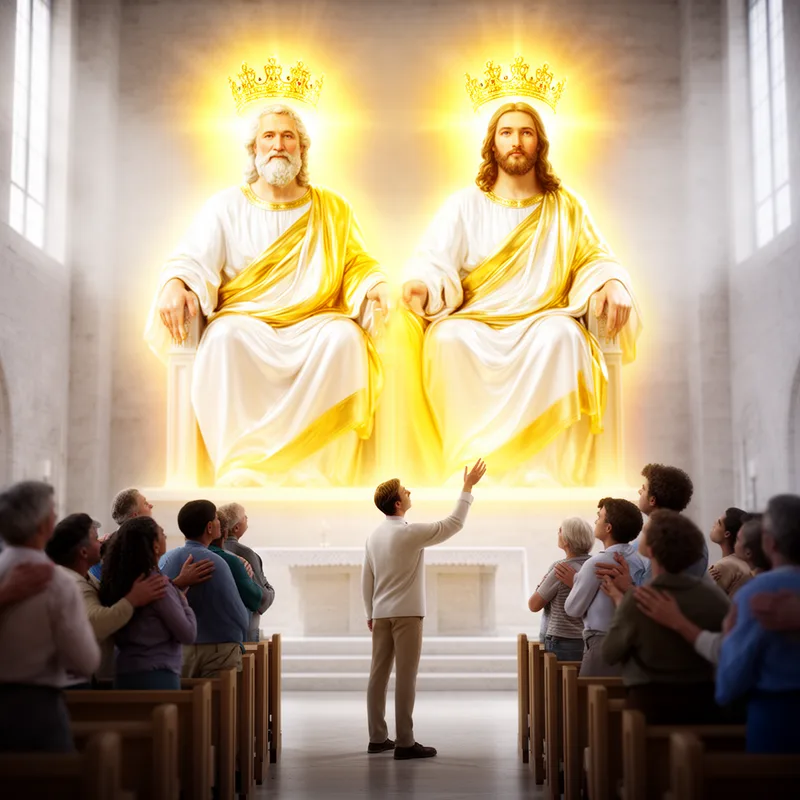
Athanasianism
- noun
- /ˌæθəˈneɪʒənˌɪzəm/
- Specialized
- The doctrine of Athanasianism became central to mainstream Christian belief in the Trinity.
Examples
-
The doctrine of Athanasianism teaches that Christ is of the same substance as God the Father.
-
She wrote her thesis on the influence of Athanasianism in medieval theology.
-
Many early church councils debated the tenets of Athanasianism and Arianism.
-
The church formally adopted Athanasianism in the fourth century.
-
Many theologians debate the implications of Athanasianism today.
-
In many theological discussions, Athanasianism is highlighted for its role in defining the nature of the Trinity.
-
Historians often explore how Athanasianism shaped the early Christian church's beliefs about divinity.
Synonyms
A Christian belief that the Father and the Son are the same being
Antonyms

- Specialized
 1
9.9
1
9.9

A Christian belief that Jesus is not fully God but is below God the Father
Surface Forms
Morphology
Athanasianism = Athanasian (semi-transparent) = Athanasius + ian + ism
Formed by adding the productive suffix '-ism' to the adjective 'Athanasian'; the morphological process is regular but understanding depends on knowledge of the proper name and specialized theology.
Etymology
Athanasianism is named after the early church leader Athanasius, whose Greek name athanatos means 'deathless'. So Athanasianism is the set of beliefs taught by Athanasius, especially the idea that the Son shares the same eternal nature as the Father, and the 'deathless' root helps you remember its focus on the Son being fully God and eternal.