

Asparagus setaceus
- noun
- Specialized
- She decorated the centerpiece with sprigs of Asparagus setaceus for a soft, lush effect.
Examples
-
The Asparagus setaceus can be invasive if not managed in warm climates.
-
The Asparagus setaceus adds a unique touch to the garden.
-
Many gardeners choose Asparagus setaceus for its delicate, feathery foliage in hanging baskets.
-
Many people love the feathery foliage of Asparagus setaceus.
-
The delicate, feathery foliage of Asparagus setaceus is often used in floral arrangements.
-
Gardeners love to plant Asparagus setaceus in hanging baskets for its graceful climbing habit.
-
The feathery leaves of Asparagus setaceus add a lush, tropical feel to any indoor space.
Synonyms
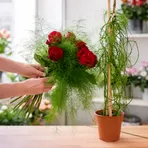
A climbing evergreen plant with thin, feathery leaves often used in flower arrangements

A houseplant that has thin feathery leaves like a fern but is not a true fern
Surface Forms
Morphology
asparagus + setaceus
This is a botanical binomial: 'asparagus' names the plant genus and the second element is a Latin adjective ('setaceus' = bristle- or hair-like). If a learner knew both constituents, they could infer it refers to a type of asparagus with fine, hairlike/feathery foliage, but the full species-specific information (fernlike climber, ornamental use, native range) is not strictly predictable from the parts. Because some decoding is possible but not fully precise, it is best classified as partially transparent.
Etymology
The name Asparagus setaceus comes from Latin: asparagus is the plant group and setaceus means 'bristle-like' or 'hair-like'. So the name paints a picture of its thin, feathery leaves and explains why we call it a fernlike climbing plant.

