

Arundinaria tecta
- noun
- Specialized
- Arundinaria tecta is often found growing in dense thickets along riverbanks in the southeastern United States.
Examples
-
Wildlife use Arundinaria tecta as shelter and food during the wet season.
-
Arundinaria tecta commonly thrives along riverbanks, contributing to the stability of the shoreline.
-
Researchers visited several wetlands to study the ecological role of Arundinaria tecta.
-
The Arundinaria tecta grows well in wetlands.
-
Have you seen the Arundinaria tecta in the marsh?
-
Arundinaria tecta grows in moist areas, providing essential habitats for various wildlife species.
-
The presence of Arundinaria tecta in wetlands indicates a healthy ecosystem in southern United States.
Synonyms
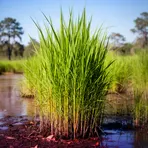
A tall grass that grows in wet places in the southern United States
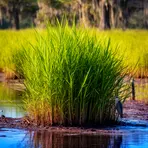
A grass like reeds that grows in wet places like marshes, often in the southern United States
How Tall
- Specialized

- US
 1
6.9
1
6.9

Surface Forms
Morphology
Arundinaria + tecta
This is a Latin binomial (taxonomic) name rather than a compositional English phrase; even if a learner recognises 'Arundinaria' as a genus label, the specific species identity and habitat ('small cane grass in wetlands') cannot be derived from the parts. The second element 'tecta' is not a common English word, so a B1 learner who knows the constituent items would still not be able to infer the specialised botanical meaning, making the expression opaque.
Etymology
Arundinaria tecta may come from old Latin words arundo ('reed') and tecta ('covered' or 'sheltered'), giving the picture of a reed that hides and covers wet ground. That's why the name fits a small cane grass that grows in dense, sheltered thickets along rivers.