

Arundinaria gigantea
- noun
- /ˌɑːrʌnˈdɪnəriə dʒɪˈɡæntiə/
- Specialized
- The wetlands were filled with dense stands of Arundinaria gigantea reaching over ten feet in height.
Examples
-
Many animal species depend on Arundinaria gigantea thickets for shelter and food.
-
Early settlers used Arundinaria gigantea for making baskets and fishing poles.
-
The Arundinaria gigantea can grow up to 30 feet tall.
-
Many gardeners choose Arundinaria gigantea for its fast growth.
-
Early settlers used Arundinaria gigantea to create sturdy baskets and fishing poles.
-
Many animal species rely on Arundinaria gigantea thickets for shelter and food.
-
The wetlands featured dense stands of Arundinaria gigantea, often exceeding ten feet in height.
Synonyms

A tall grass that grows in thick groups in the southern United States
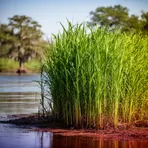
Tall grass that grows in thick groups near rivers in the southern United States
How Tall


Surface Forms
Morphology
Arundinaria + gigantea
The name is compositionally a genus (Arundinaria) + descriptive species epithet (gigantea), so if a learner recognizes the root 'gigant-' they can infer 'large/giant Arundinaria' (giant cane). However, the epithet is Latin and not a standard English word, so an average B1 learner who does not recognize Latin morphology may not reliably derive the meaning. The binomial pattern is cross-linguistically common in taxonomy, giving partial predictability but not full transparency.
Etymology
Arundinaria gigantea is a Latin name that describes the plant. Arundinaria comes from a word for 'reed' or 'cane' and gigantea means 'giant', so the name says 'giant reed' and helps you remember it is a very tall bamboo-like grass.