

Artemisia dracunculus
- noun
- Specialized
- Fresh Artemisia dracunculus adds a delicate, anise-like flavor to many French dishes.
Examples
-
Did you know Artemisia dracunculus is also called tarragon?
-
I love using Artemisia dracunculus in my salad dressings.
-
Chefs often use Artemisia dracunculus to enhance the taste of sauces and dressings.
-
The leaves of Artemisia dracunculus are prized for their use in traditional herbal remedies.
-
Chefs often use Artemisia dracunculus to enhance the taste of sauces and dressings.
-
Fresh Artemisia dracunculus adds a delicate, anise-like flavor to many French dishes.
-
I love using Artemisia dracunculus in my salad dressings.
Synonyms
 12
5.8
12
5.8

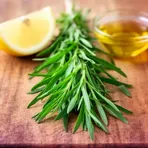
An herb with narrow leaves used to add a fresh, slightly sweet taste to food
 1
8.2
1
8.2
An herb with a strong smell that flavors food, especially French dishes
Surface Forms
Morphology
Artemisia + dracunculus
This is a Latin binomial scientific name: while 'Artemisia' signals a plant genus (so a learner might infer it is a plant), the species epithet 'dracunculus' is not a meaningful English word and is not defined here, so the specific sense 'tarragon' (a culinary herb) cannot be derived. Botanical Latin is specialized vocabulary shared across languages but requires domain knowledge beyond B1, making the overall meaning unpredictable from the constituents.
Etymology
Artemisia dracunculus may get its second name dracunculus from Latin for 'little dragon' because old herb experts thought its thin, curled roots or sharp, strong taste felt dragon-like. That's why the plant keeps a dragon name and is known today as a herb with a strong, anise-like flavor used in cooking.