
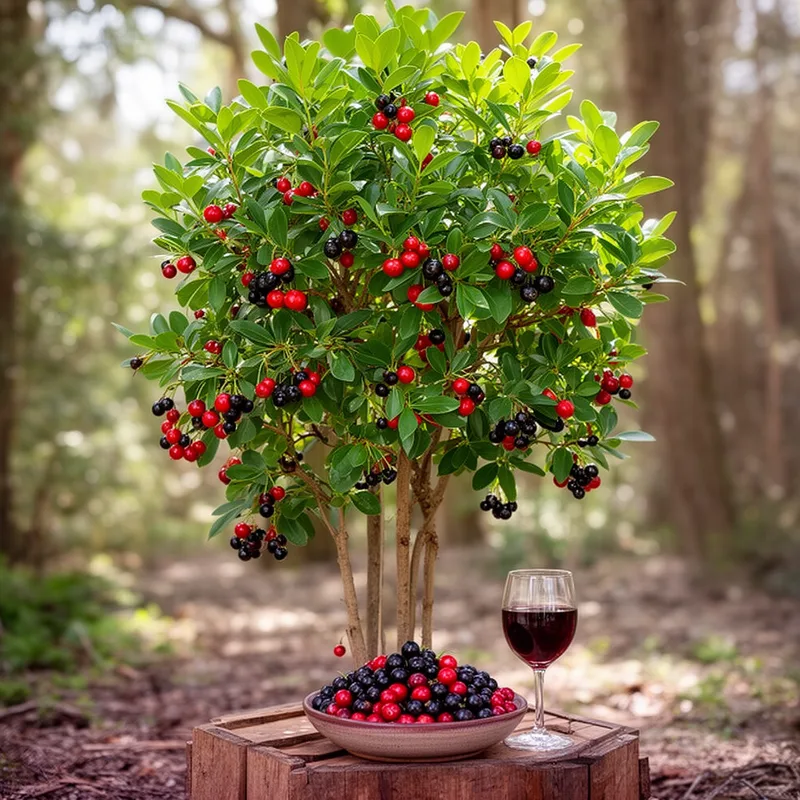
Aristotelia racemosa
- noun
- Specialized
- Winemakers sometimes use the fruit of Aristotelia racemosa to create a unique variety of wine.
Examples
-
The Aristotelia racemosa in our garden produces berries that are popular with native birds.
-
During spring, the leaves of Aristotelia racemosa add a graceful touch to woodland landscapes.
-
The Aristotelia racemosa is known for its beautiful red berries.
-
Have you seen the Aristotelia racemosas in the garden?
-
In our garden, the Aristotelia racemosa showcases stunning red berries that attract many birds.
-
The graceful Aristotelia racemosa adds vibrant colors to the landscape with its beautiful foliage in the autumn.
-
Many people appreciate the Aristotelia racemosa for its small, red berries that can be used to make a delightful wine.
Synonyms

A small New Zealand shrub with pretty leaves and red berries used to make wine
Surface Forms
Morphology
Aristotelia + racemosa
This is a scientific Latin binomial (a genus + species name), so even if a learner knows 'Aristotelia' as a plant genus, the specific epithet 'racemosa' is a non‑English taxonomic label (and is not attested in the provided dictionary). Taxonomic names function as proper names rather than compositional English phrases, so the detailed descriptive meaning (a graceful deciduous shrub with red berries, used for wine) cannot be derived by a B1 learner from the constituents.
Etymology
Aristotelia racemosa may come from two parts: Aristotelia probably honours the Greek thinker Aristotle, and racemosa is a Latin word meaning 'cluster', pointing to the groups of small berries or flowers on the plant. So the name gives a simple picture — a shrub with many small clustered berries, which helps explain why people eat the fruit or make wine from it.

