
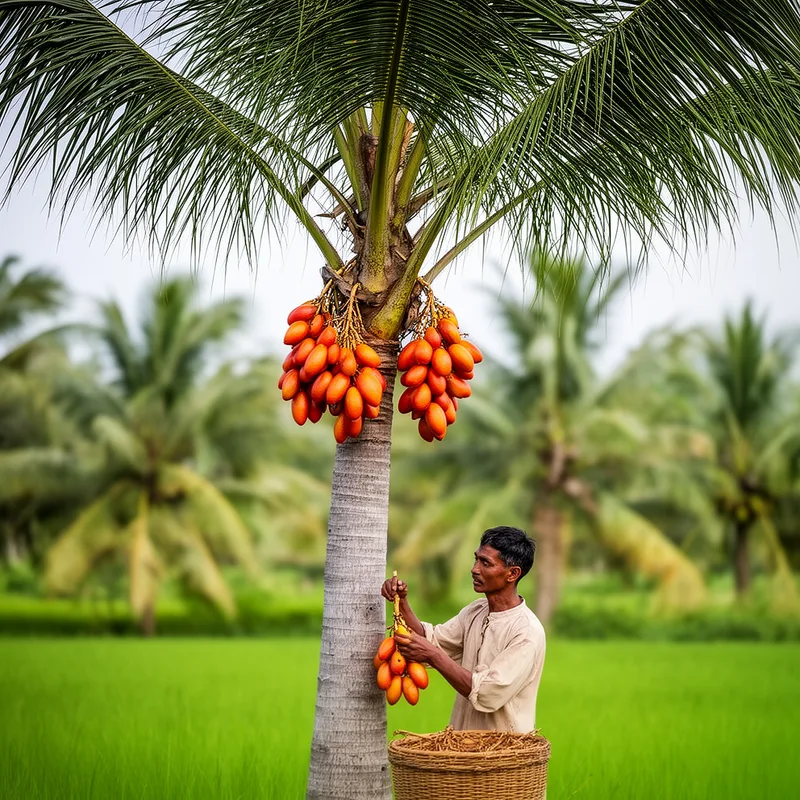
Areca catechu
- noun
- Indian
- The Areca catechu is widely cultivated throughout Southeast Asia for its valuable fruit.
Examples
-
In many Asian cultures, people chew the fruit of the Areca catechu during social gatherings.
-
In many Asian countries, Areca catechu is commonly used in traditional ceremonies.
-
Many traditional ceremonies incorporate the nuts harvested from Areca catechu.
-
Research has shown that Areca catechu contains important alkaloids.
-
The Areca catechu tree grows well in tropical climates.
-
The Areca catechu palm tree is often found in gardens across Southeast Asia, prized for its nuts.
-
During festivals, the nuts from the Areca catechu are offered as part of traditional rituals.
Synonyms

A tropical palm tree from Southeast Asia that makes betel nuts for chewing

A tropical palm tree that produces betel nuts with a hard, stringy outer husk
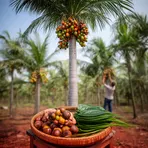
A tall tropical palm from Southeast Asia that produces egg-shaped nuts chewed with betel leaf
Surface Forms
Morphology
This is a taxonomic Latin binomial rather than a compositional English phrase: knowing 'Areca' (a palm genus) and 'catechu' (an Acacia-related term) does not let a B1 learner derive that this refers specifically to the betel-nut palm species or its fruit. Scientific names follow naming conventions and historical roots rather than transparent, predictable English composition, so the meaning is not inferable from the constituents.
Etymology
Areca catechu may come from local words in South and Southeast Asia: Areca for the palm and catechu for the chewing fruit. People know this tree for its hard orange 'betel nut' that is chewed in many ceremonies and daily life, so the name points to the palm that gives that famous nut.

