
Aragonese


 1
7.6
- adjective
- It's part of the 16th-century Aragonese Castle, which stands on a picturesque outcrop of rock connected to the main island by a bridge.
- Aragonese translation
Examples
-
It was a common practice of Aragonese Moriscos to send their sons to Valencia to further their Arabic education.
Academic text (1995) -
But she speaks perfect Castilian with a subtle and nice Aragonese accent.
Blog text (3) -
The Catalan-Aragonese sanitary system of the second half of the 15th century had a Health Guard or Plague Guard, also called Morber.
Academic text (2013) -
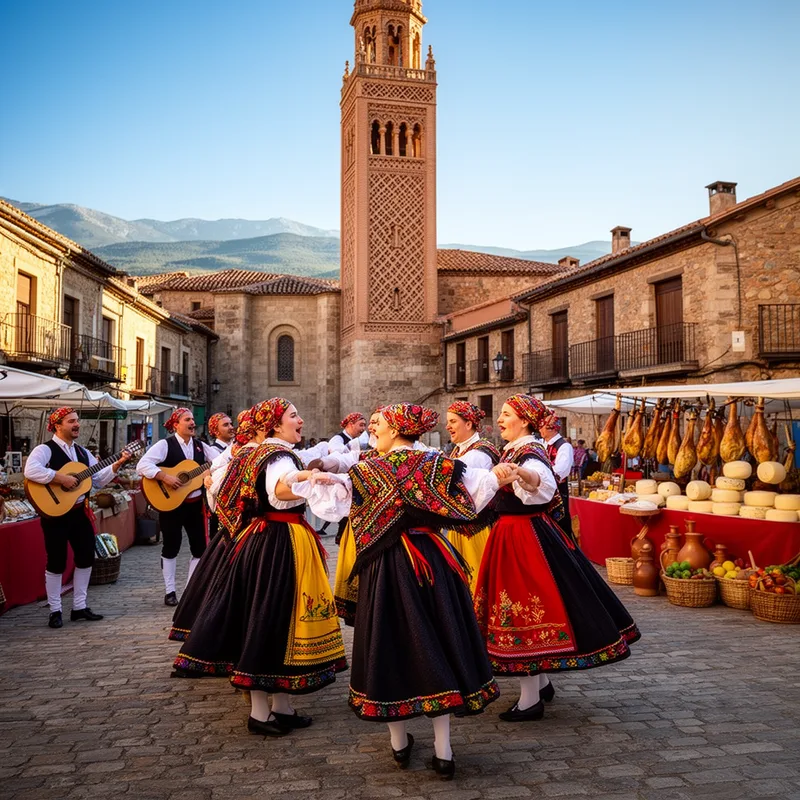
Zaragoza, on October 12, with Aragonese dance and music, pays homage to its Virgin of the Pilar, who appeared in the first century to Santiago and later became the patron saint of Spain.
Academic text (1991) -
At the Aragonese cortes of 1484 in Tarragona, Ferdinand, disappointed over the failure of diplomatic measures to recover Rousillon from the French and wishing to take advantage of the inexperience of a new king, proposed going to war against France.
Academic text (2004) -
The Aragonese culture is rich in history, showcasing traditional music and dance.
-
Many Aragonese people still celebrate ancient festivals that reflect their heritage.
-
The Aragonese language has seen a revival in recent years, with efforts to promote its use in schools.
Surface Forms
Morphology
Etymology
Aragonese comes from the place name Aragón in Spain plus the ending -ese, which shows 'from a place', like in Chinese or Japanese. So Aragonese means 'relating to Aragon', and is used for the region, its people, culture, language, or products.