
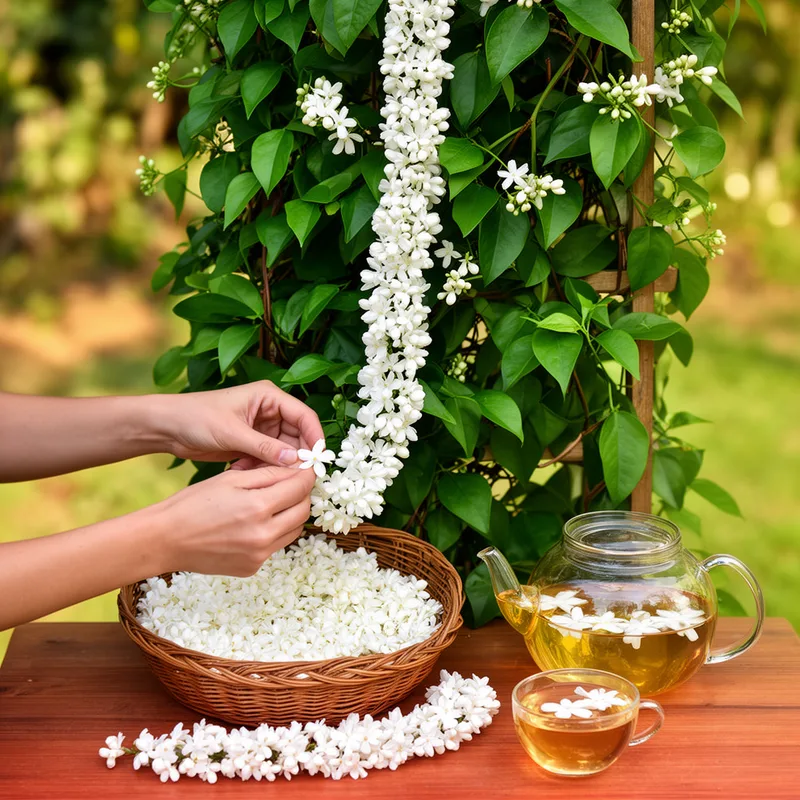
Arabian jasmine
- noun
- The Arabian jasmine in her garden blooms every summer, filling the air with a sweet fragrance.
Examples
-
He gave her a garland made from fresh Arabian jasmine flowers at the festival.
-
Arabian jasmine is often used to flavor tea in Southeast Asian countries.
-
The Arabian jasmine blooms beautifully in the spring.
-
I love the scent of Arabian jasmine in my garden.
-
Arabian jasmine is known for its sweet fragrance and beautiful white flowers, making it a popular choice for gardens.
-
At the festival, she received a lovely bouquet of Arabian jasmine that filled the room with its delightful scent.
-
Every morning, the intoxicating aroma of Arabian jasmine blossoms drifted through the open window.
Synonyms
A small evergreen vine with fragrant white flowers used in tea and perfume
Surface Forms
Morphology
This is a straightforward adjective + noun composition: a B1 learner who knows 'Arabian' (pertaining to Arabia) and 'jasmine' (a fragrant plant) will naturally infer it refers to a type or variety of jasmine associated with Arabia. The pattern nationality/adjective + plant name is cross-linguistically common, so the basic meaning is directly derivable from the constituents (botanical specifics are additional factual detail but not required for comprehension).
Etymology
Arabian jasmine may come from old trade routes when Arab traders carried the sweet-smelling jasmine flower from Asia to the Middle East and Europe. So people linked Arabian with that fragrant white flower, and today the name refers to the small, very fragrant blooms used in tea and garlands.

