
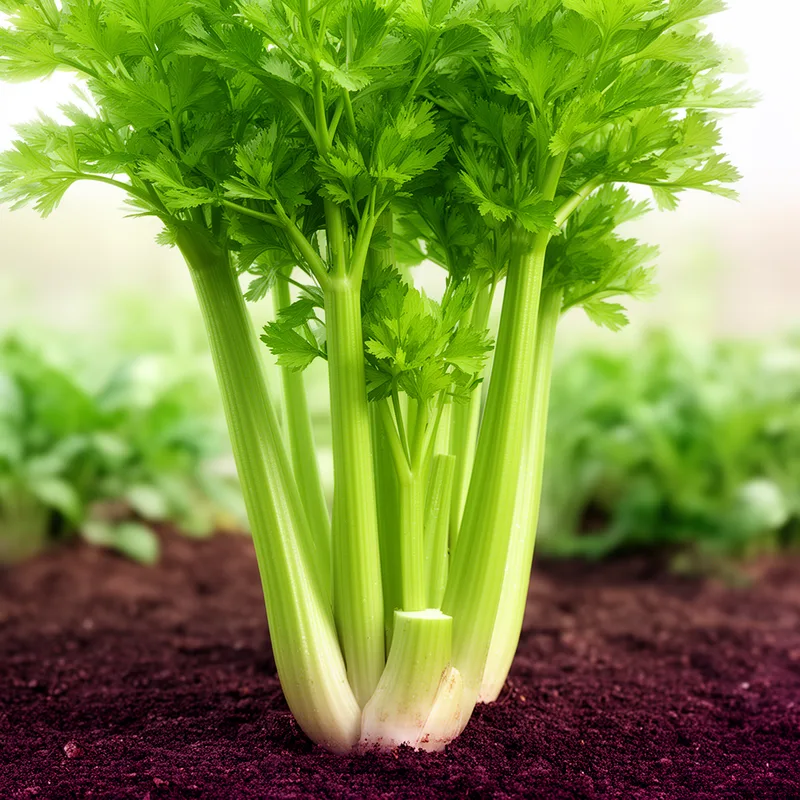
Apium graveolens


 1
6.4
- noun
- /ˈeɪpiəm ˌɡræviˈoʊlənz/
- Specialized
- In botanical texts, Apium graveolens is frequently cited for its historical use in European cuisine.
Examples
-
Apium graveolens is commonly grown in gardens worldwide for its crunchy stalks and aromatic leaves.
-
I bought some Apium graveolens from the farmer's market.
-
Scientific studies often reference Apium graveolens when discussing the medicinal properties of celery.
-
The Apium graveolens in my garden is growing well.
-
The recipe calls for celery to add crunch and a fresh flavor to the dish.
-
Many people enjoy the fresh taste of celery sticks with peanut butter as a snack.
-
In soups, celery adds a wonderful depth of flavor along with other vegetables.
Synonyms
 64
1.0
A green vegetable with long crisp stalks eaten raw or cooked
Surface Forms
Morphology
Apium + graveolens
The headwords are Latin botanical terms rather than ordinary English words, so a B1 learner who 'knows' the listed constituents (which are marked as not found in an English dictionary) would not be able to compose their meanings to get 'celery'. Scientific binomials function as arbitrary labels and rely on specialist knowledge of Latin roots, making the connection non-obvious and unpredictable for general learners.
Etymology
Apium graveolens comes from Latin words. Apium was a name for a parsley-like plant and graveolens means 'strong-smelling', so the name gives the image of a scented herb and explains why it refers to the celery we eat today.