
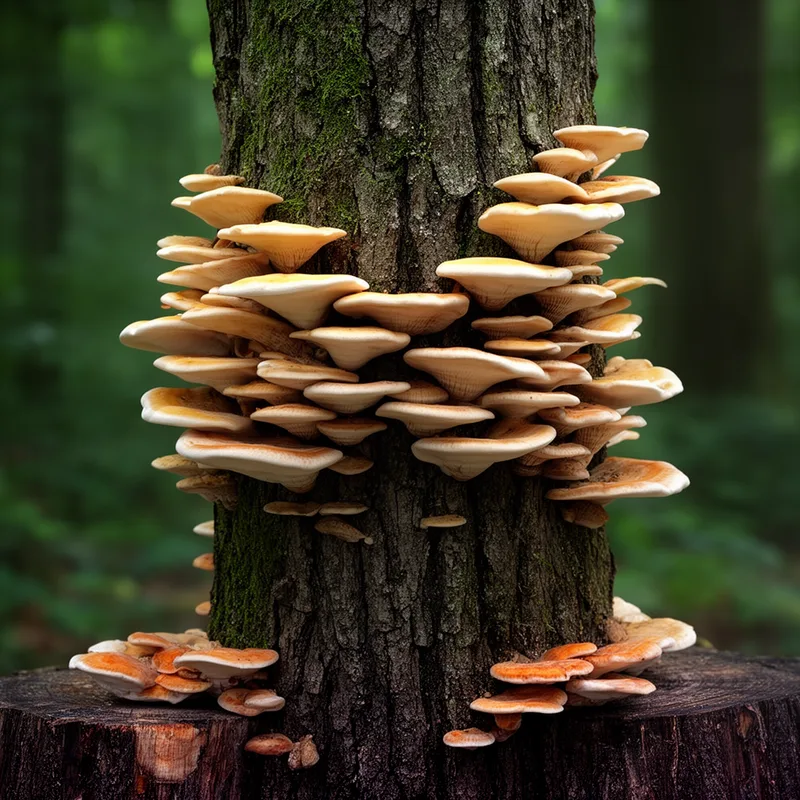
Aphyllophorales
- noun
- /əˌfɪləˈfɔːrəlɪz/
- Archaic
- Some shelf fungi, previously grouped under Aphyllophorales, are now placed in different families.
Examples
-
Many wood-decaying fungi once classified in the Aphyllophorales can be found in temperate forests.
-
Many species of Aphyllophorales grow on decaying wood.
-
The taxonomic position of Aphyllophorales has changed as fungal classification has advanced.
-
The Aphyllophorales are fascinating fungi.
-
Many wood-decaying fungi classified under Aphyllophorales play an essential role in forest ecosystems.
-
Some species of Aphyllophorales are commonly found growing on dead trees in moist environments.
-
Researchers study Aphyllophorales to understand their impact on nutrient cycling in forest habitats.
Surface Forms
Morphology
Aphyllophorales = a + phyllophor + ales
A technical taxonomic formation from Greek combining forms plus the scientific order suffix '-ales'; the components are not productive or familiar to an average B1 learner, so the meaning is not transparently derivable.
Etymology
Aphyllophorales comes from Greek parts a- meaning 'without' and phyllo meaning 'leaf'. So the name was used for fungi that are 'without leaf' — they do not have the leaf-like gills of normal mushrooms and often grow as shelf-like shapes on wood.

