
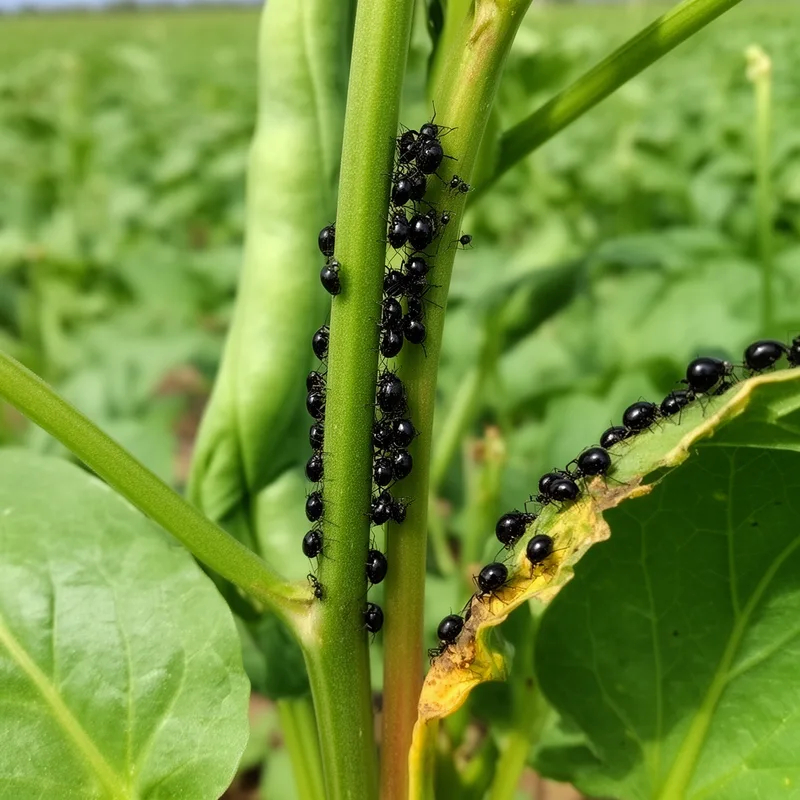
Aphis fabae
- noun
- Specialized
- The infestation by Aphis fabae caused severe damage to the bean crop this year.
Examples
-
Farmers monitor their fields regularly to detect the presence of Aphis fabae.
-
Biological control methods can help reduce the impact of Aphis fabae on sugar beet plantations.
-
The Aphis fabae is a common pest in bean crops.
-
Farmers often struggle with Aphis fabae infestations.
-
Farmers monitor their plants for signs of Aphis fabae infestations to protect their crops.
-
The presence of Aphis fabae can lead to reduced yields in sugar beet and bean fields.
-
Controlling Aphis fabae populations is crucial for maintaining healthy bean crops.
Synonyms

A small black insect that eats the sap of beans and other crops
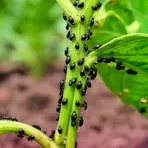
A small dark insect that lives on plants and eats their sap
Surface Forms
Morphology
Aphis + fabae
This is a scientific Latin binomial name rather than a compositional English phrase: 'Aphis' identifies the genus (aphids) but 'fabae' is a Latin specific epithet (not a normal English word) and its meaning ('of the bean') is not obvious to a B1 learner. Because the second constituent is not a transparent English lexical item and the whole form is taxonomic, the overall meaning cannot be derived without specialised biological or Latin knowledge.
Etymology
Aphis fabae comes from a simple picture: Aphis marks it as an aphid and fabae means 'of the bean', so the name shows a small dark insect living on bean plants and sucking their sap. That's why the name is used today for the common 'bean aphid' that often damages bean and beet crops.

