
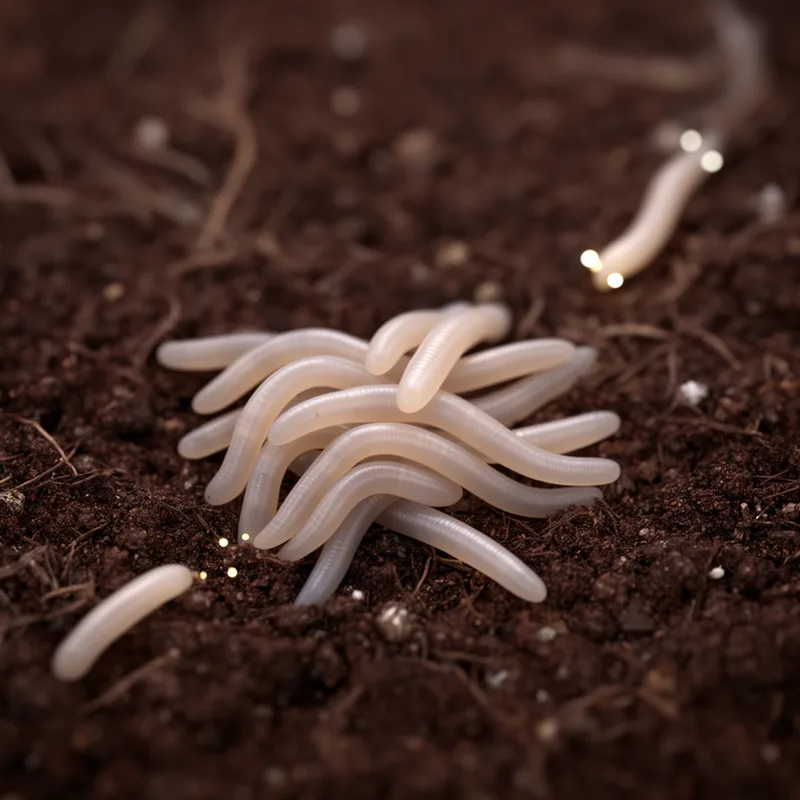
Aphasmidia
- noun
- /əˈfæzmɪdiə/
- Specialized
- The presence or absence of phasmids distinguishes Aphasmidia from other groups.
Examples
-
Many soil-dwelling nematodes are classified within the Aphasmidia subgroup.
-
Did you know that Aphasmidia lack phasmids?
-
Some scientists debate the evolutionary significance of Aphasmidia in nematode taxonomy.
-
The Aphasmidia are a fascinating group of roundworms.
-
In biological classification, Aphasmidia refers to a group of roundworms that lack phasmids.
-
Researchers often study Aphasmidia to understand their role in soil ecosystems.
-
The distinguishing feature of Aphasmidia is their absence of phasmids, setting them apart from other nematodes.
Surface Forms
Morphology
Aphasmidia = aphasmid (opaque) = a + phasmid + ia
Formation by adding the taxonomic/collective suffix '-ia' to 'aphasmid' is a regular and recognizable morphological step within biological terminology.
Etymology
Aphasmidia begins with a- meaning 'not' and contains phasmid, the name for a tiny sensing organ in some roundworms (think phantom to remember the root). So, Aphasmidia are the worms 'without' phasmids, and the name points to the lack of that organ.

