

Anura
9.9
A group of amphibians like frogs and toads that have no tail as adults
- noun
- /əˈnʊrə/
- Specialized
:
Anura
- Frogs, toads, and related species all belong to the taxonomic order Anura.
Examples
-
And of course, it's easy to find the order name for frogs: Anura.
Blog text (17) -
In the study of amphibians, Anura refers to a group known for their lack of tails as adults.
-
The order Anura includes over 3,000 species of frogs and toads worldwide.
Synonyms

8.8
A group of animals that includes all frogs and toads
emphasizes lack of tail in adults as a defining trait
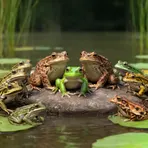
9.9
A group of amphibian animals like frogs and toads
focuses on absence of a tail in adults as a defining feature
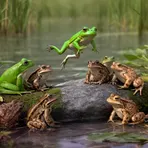
9.9
A group of animals like frogs and toads that jump and have no tail as adults
stresses taxonomic inclusion of frogs and toads rather than leg traits
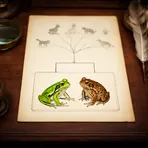
9.9
A group used in older biology to include frogs and toads
is the current order defined by adults lacking a tail
Compounds
Surface Forms
Etymology
Anura comes from Greek parts a- meaning 'without' and oura meaning 'tail', so it literally says 'without a tail'. That's why scientists use Anura for the group of frogs and toads that have no tail as adults.

