
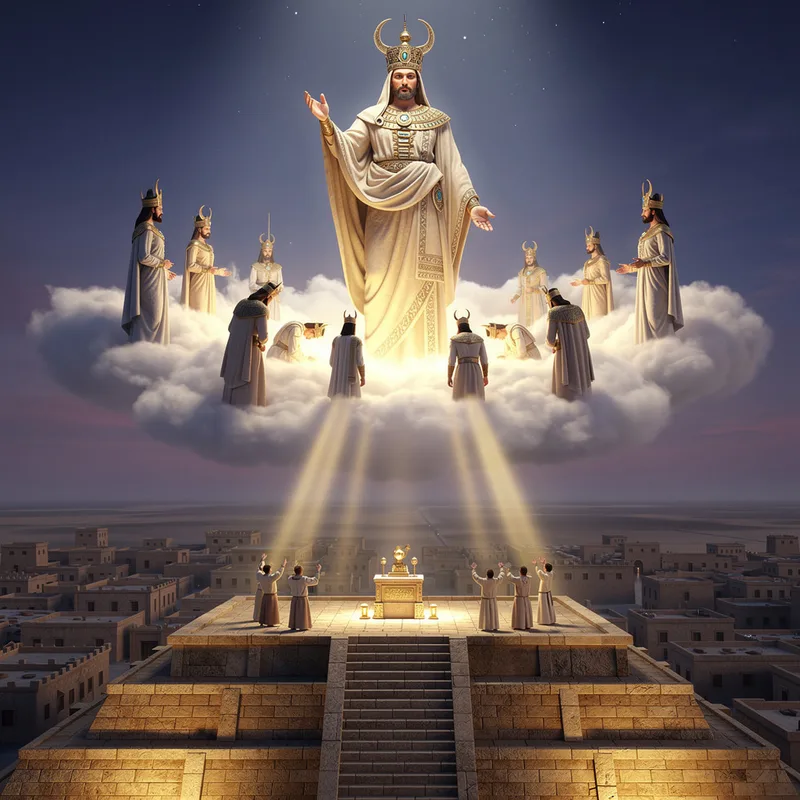
Anu
 3
9.9
3
9.9

- proper noun
- Literature
- "Yes, sir," Commander Inanna said, and Anu threw himself into the central transit shaft.
Loading YouTube…
Watch on YouTubeNow on or Anu, I've determined is God.
- Now on or Anu, I've determined is God.
Examples
-
He possessed intelligence, his command, like the command of Anu God.
-
Now on or Anu, I've determined is God.
-
Even if Anu somehow managed to reach Command One, he could not abort the order Dahak had just acknowledged.
Fiction book (1992) -
The mutineers were hugely outnumbered, but they had the priceless advantage of surprise, and Anu had planned with care.
Fiction book (1992) -
"What shall we do, Anu?" Commander Inanna's eyes were anxious through her armor's visor, and he did not blame her.
Fiction book (1992) -
"... nine minutes and counting," the computer voice said, and Fleet Captain (E) Anu, Chief Engineer of the ship-of-the-line Dahak, cursed.
Fiction book (1992) -
In Figure 7, the man's function is surely ritual, for the altar borne by a bull that stands before him is topped by the symbols of Inanna, the Sumerian mother goddess, daughter of the sky god Anu.
Academic text (1993) -
In Babylonian mythology, Anu is revered as the god of the sky.
-
The ancient temple dedicated to Anu was a significant site for worship in Babylon.
-
Many stories in Babylonian texts highlight the power of Anu, the supreme sky god.
Surface Forms
Etymology
Anu comes from an old Mesopotamian word An meaning 'sky' or 'heaven', so he was the sky god and the highest ruler of the gods.