
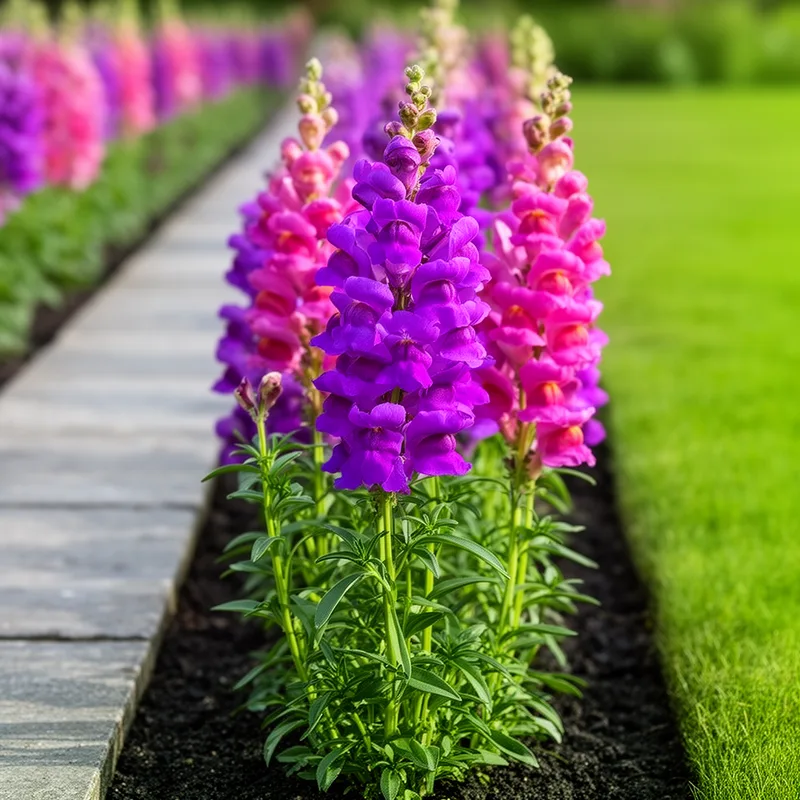
Antirrhinum majus
- noun
- /ænˈtɪrɪnəm ˈmeɪdʒəs/
- Specialized
- The garden was filled with vibrant Antirrhinum majus blooming along the walkway.
Examples
-
She chose Antirrhinum majus for her flower arrangements because of their striking colors.
-
I bought some Antirrhinum majus plants for my garden.
-
Botanists often study Antirrhinum majus to better understand flower development.
-
The Antirrhinum majus blooms beautifully in spring.
-
The garden was filled with vibrant Antirrhinum majus blooming along the walkway.
-
She chose Antirrhinum majus for her flower arrangements because of their striking colors.
-
I bought some Antirrhinum majus plants for my garden.
Synonyms
 7
5.3
7
5.3

A garden flower with spikes of bright flowers that look like a dragon's face

A plant from the Mediterranean that lives for many years and has purple or pink flowers
Surface Forms
Morphology
Antirrhinum + majus
The first element 'Antirrhinum' signals a flowering-plant genus (so a learner who knows that could infer this refers to a plant with showy flowers), but the second element 'majus' is a Latin epithet (not a common English word) and does not transparently yield the specific common name 'snapdragon' or the fuller meaning (perennial Mediterranean plant). Thus the composition gives a partial clue (flowering plant) but not the full, specific meaning, so it is only partially transparent.
Etymology
Antirrhinum majus may come from old Greek and Latin words that describe the flower's shape: Antirrhinum points to a nose-like face and majus means 'bigger'. People call it 'snapdragon' because each flower looks like a little dragon's mouth that will 'snap' shut when you press it, so the name fits the plant we know today.