
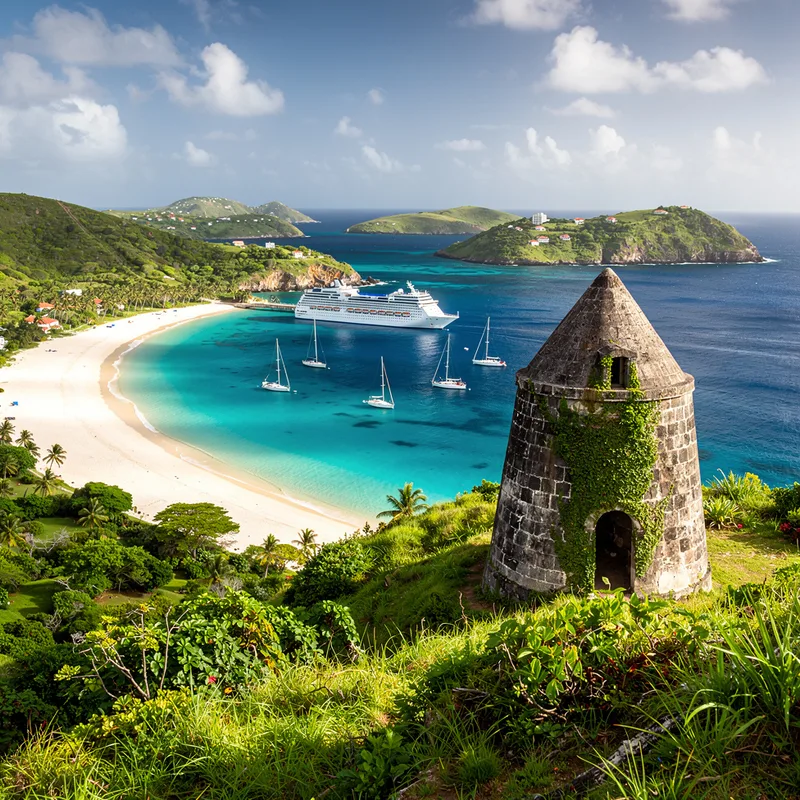
Antigua
 13
4.1
13
4.1

- proper noun
- /ænˈtiːɡə/
- The capital city of Antigua and Barbuda is St. John's.
- Carnival in Antigua
- Antigua and Barbuda
- island of Antigua
Loading YouTube…
Watch on YouTubeSo every high school student on Antigua learns the story.
- So every high school student on Antigua learns the story.
- It was just the first week of March and started throwing out to Antigua.
- So they're driving to the airport and my their flight out to English Harbour and to Antigua is cancelled.
Examples
-
We're moving to Antigua.
-
General elections were held in Antigua on 9 March 1989.
Academic text (1995) -
So every high school student on Antigua learns the story.
-
But when he thought of her arriving in Antigua alone, he felt he must help her.
Fiction book (1996) -
Thank you Andre, our day in Antigua is coming to an end.
-
Carnival in Antigua is part of a long, historical, and more significantly, symbolic tradition.
Academic text (1995) -
Robin Leach says we should move to Antigua.
-
He lives in Antigua.
-
The sounds of Carnival in Antigua are vibrant, loud, dramatic, intense, engaging, uplifting, and provocative.
Academic text (1995) -
Manning emphasized the indigenous nature of Antigua's Carnival and described it as a commemoration of emancipation from slavery.
Academic text (1995)
Compounds


Surface Forms
Etymology
Antigua comes from the Spanish word antigua, which means 'old' or 'ancient'. It is related to the English word antique, and one easy way to remember it is that Columbus named the island after a church called 'Santa María la Antigua', so the name meant 'the old one'.