
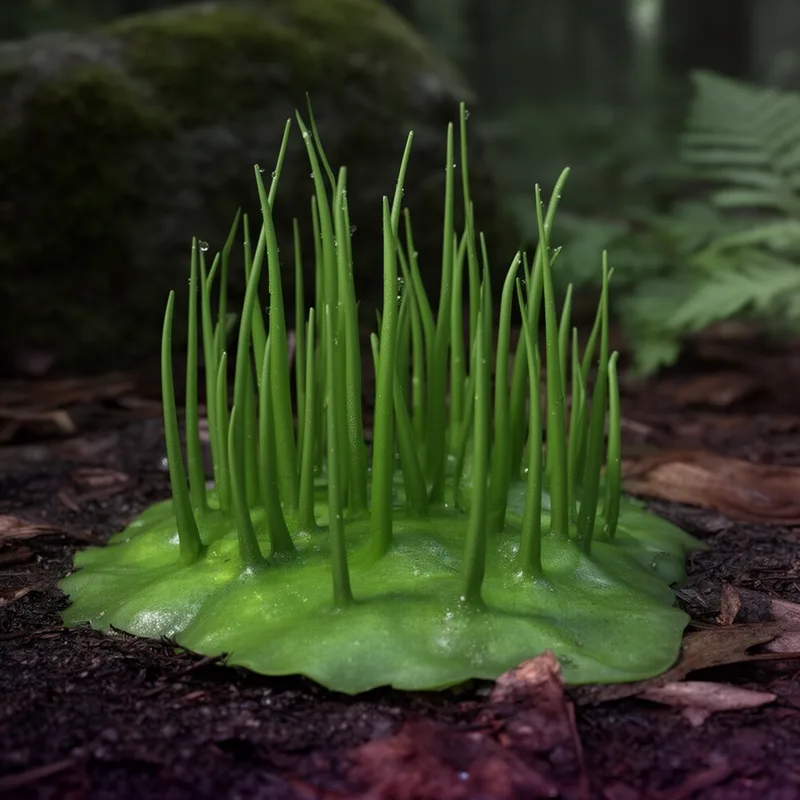
Anthocerotales
- noun
- Specialized
- Botanists study Anthocerotales to understand early land plant evolution.
Examples
-
The Anthocerotales are distinguished by their elongated, horn-shaped sporophytes.
-
Specimens from the Anthocerotales order are often found in damp, shaded environments.
-
The Anthocerotales are fascinating non-vascular plants.
-
Did you know that Anthocerotales can thrive in various environments?
-
Botanists study Anthocerotales to understand early land plant evolution.
-
Specimens from the Anthocerotales order are often found in damp, shaded environments.
-
The Anthocerotales are distinguished by their elongated, horn-shaped sporophytes.
Synonyms
A group of hornworts, small flat plants that do not have tubes to carry water
Compounds
- Specialized
A group of hornworts, small flat plants that do not have tubes to carry water
Surface Forms
Morphology
Anthocerotales = Anthoceros (opaque) = Anthocerot + ales
Formed by adding the technical taxonomic suffix '-ales' to a genus name; the elements are specialized Latin/Greek scientific forms not transparent to general learners.
Etymology
Anthocerotales comes from Greek roots anthos 'flower' and keras 'horn'. It was named for the plants' long, horn-shaped parts that make spores, so the name helps you remember this order contains the 'hornwort' plants.

